
Virtual Factory Tour (Nabari Works)
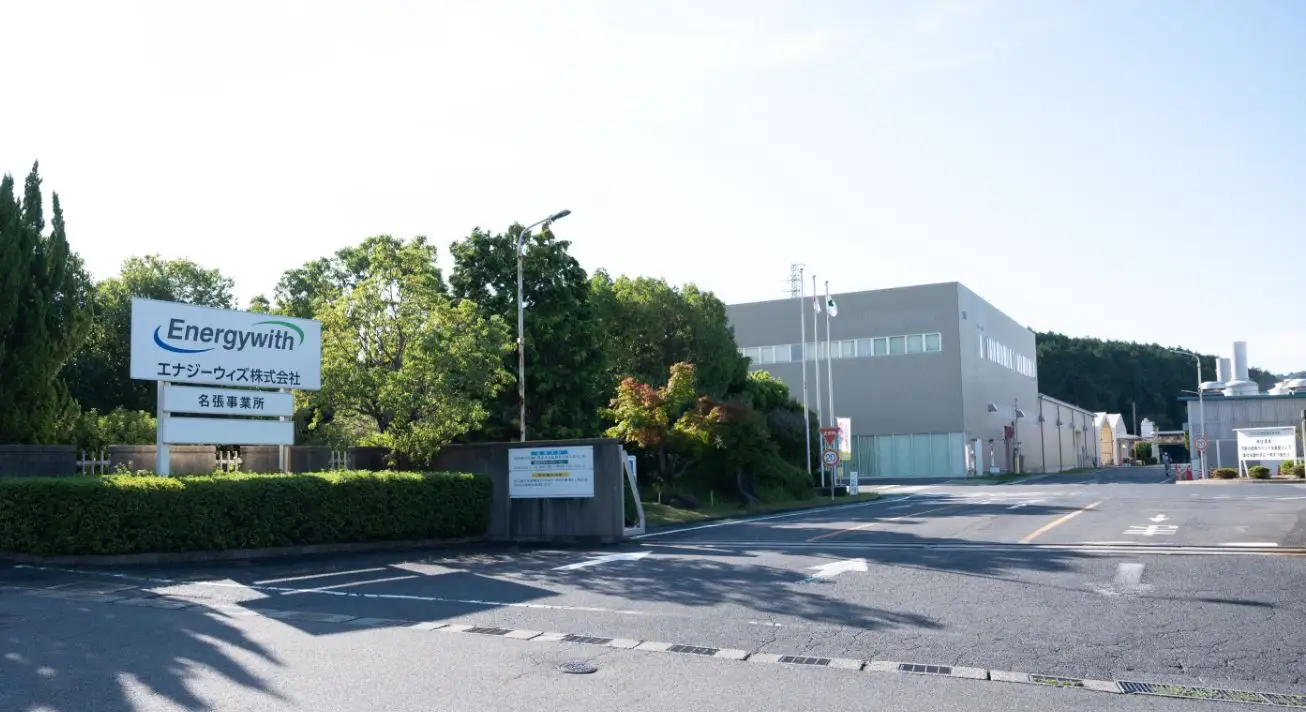
Nabari Works
- Location
- 1300-15 Yawata, Nabari-shi, Mie 518-0493, Japan MAP
- Site Area
- Approx. 105,000 m²
Products Manufactured
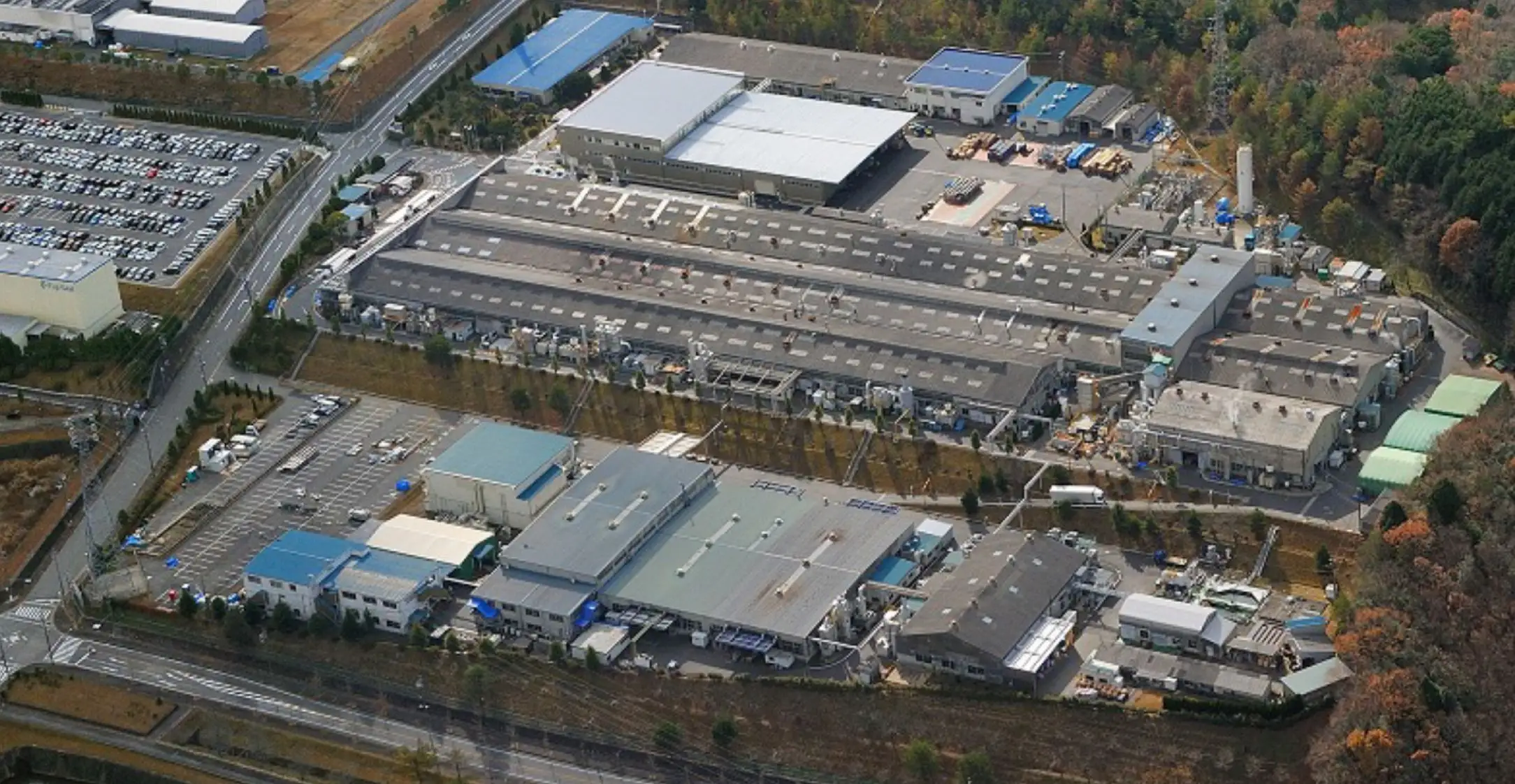
Factory Facilities Overview
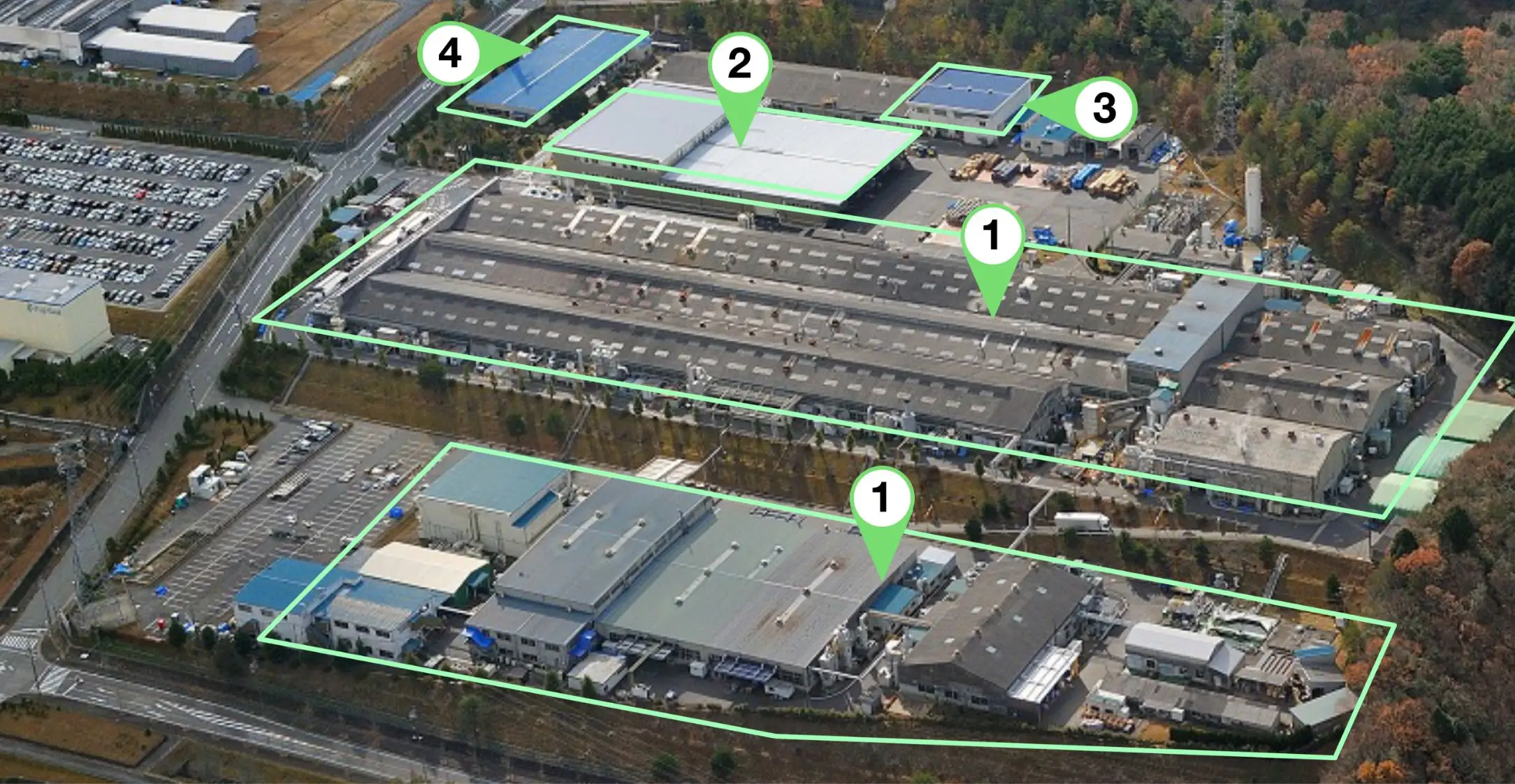
Battery Production Building
Located within the Yawata Industrial Complex in Nabari City, this building covers approx. 10,000 tsubo (about 33,000 m²) on a site of approx. 30,000 tsubo (about 100,000 m²). It manufactures and ships industrial stationary lead acid batteries, small valve-regulated lead acid batteries, and traction batteries. Environmental facilities such as wastewater treatment systems and dust collectors are also extensively installed.
New Production & Technology Building
This is a combined building that houses both production and administrative functions. The production area handles charging, inspection, and shipment of traction batteries. The office area houses employees from HR & General Affairs, Finance, IT, Procurement, Environmental & Safety Management, Development, Quality Assurance, Production Control, Production Engineering, and Manufacturing Engineering. It is also equipped with a large conference room (capacity 50) and reception rooms.
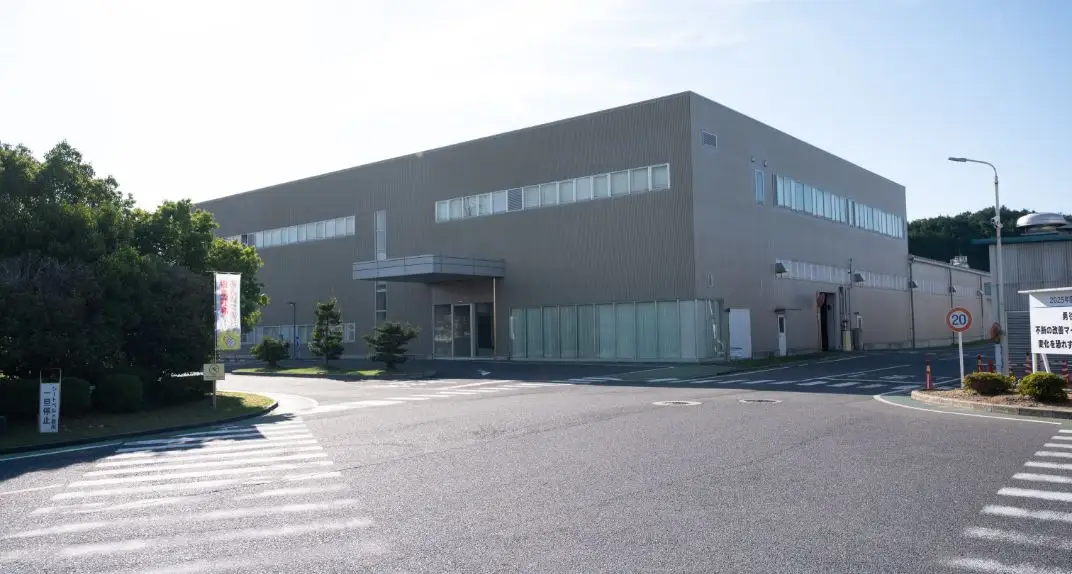
Technology Building
This building includes inspection rooms used by Quality Assurance, as well as laboratories for Production Engineering and Development. These labs conduct production equipment development, battery testing, prototyping, and technical investigations.
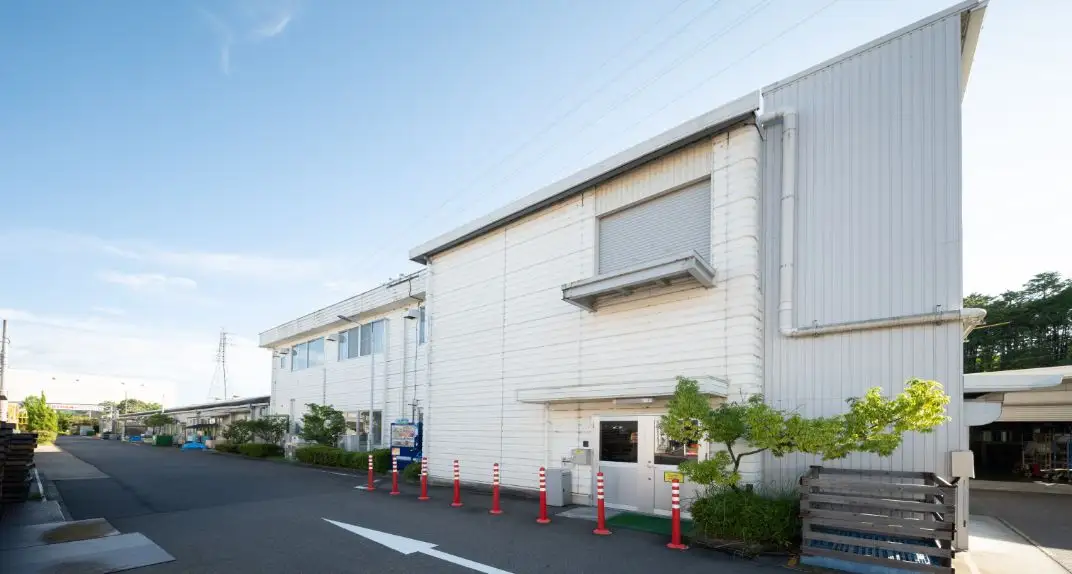
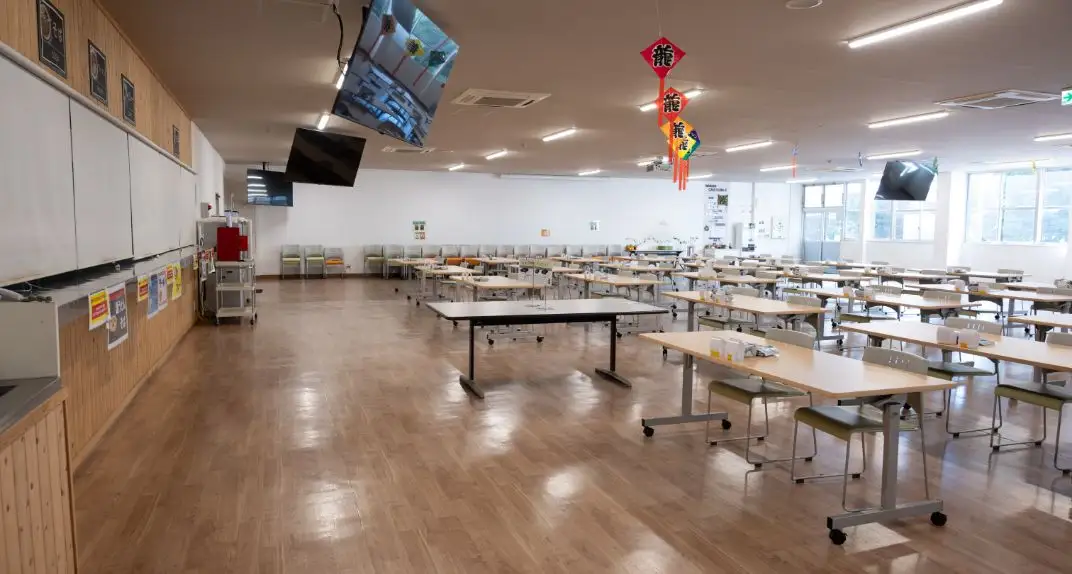
Welfare Building
This building includes an employee cafeteria, locker rooms, and bathing facilities to ensure a comfortable workplace environment. The cafeteria offers a bright and clean space with well-balanced daily menus at reasonable prices.
Manufacturing Processes
How Industrial & Valve-Regulated Lead Acid Batteries Are Made
-
Electrode Plate Process – Lead Powder
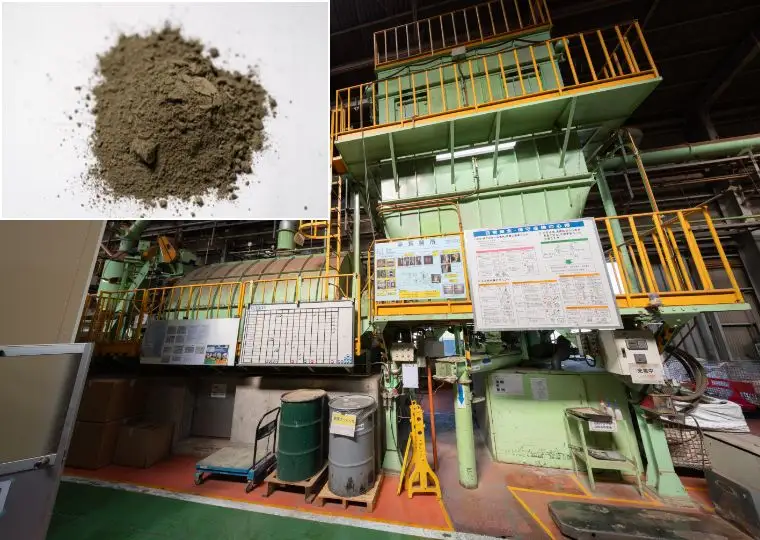
Lead powder is produced by melting lead ingots at high temperature to form spherical lead pieces. These are placed into a rotating drum, where air is supplied as the drum turns. The pieces collide with each other and undergo oxidation, gradually reducing them into a fine powder.
-
Electrode Plate Process – Paste Mixing
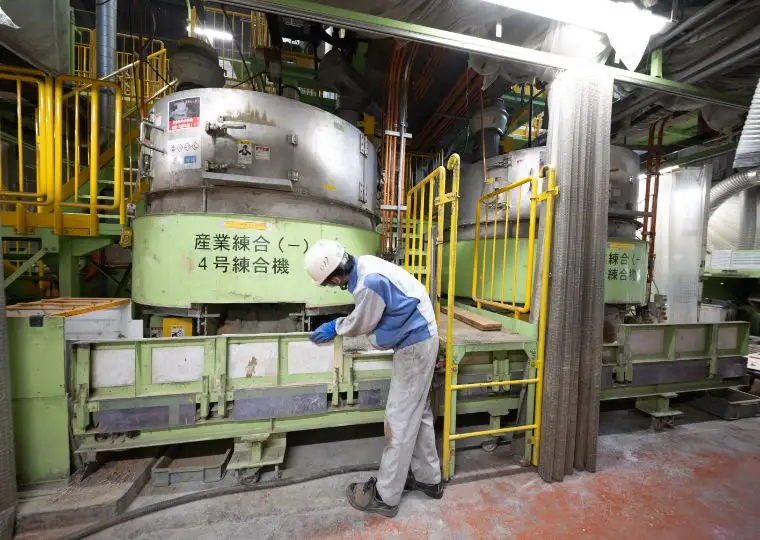
Lead powder is mixed with diluted sulfuric acid, water, and additives to create a chemical reaction that forms lead paste, which is used as the active material for both positive and negative electrodes.
-
Electrode Plate Process – Grid Casting
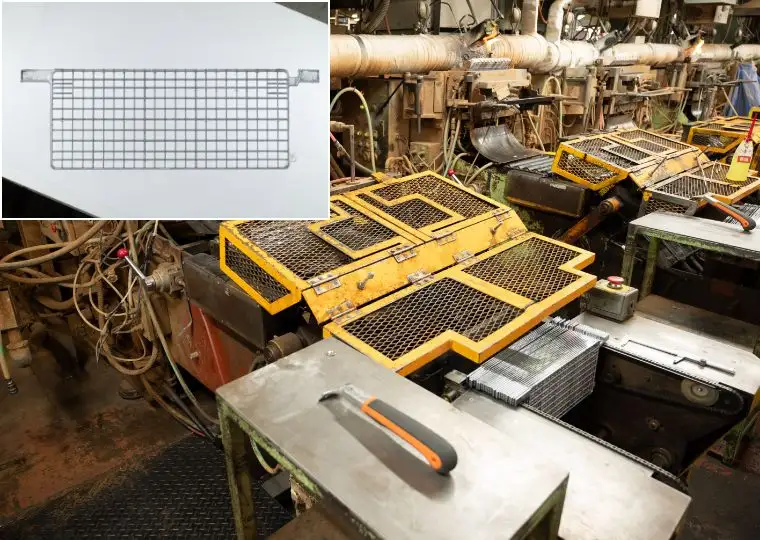
Lead and alloys are melted and poured into molds to form grids—the structural foundation that supports the active material in the battery plates.
-
Electrode Plate Process – Pasting & Curing
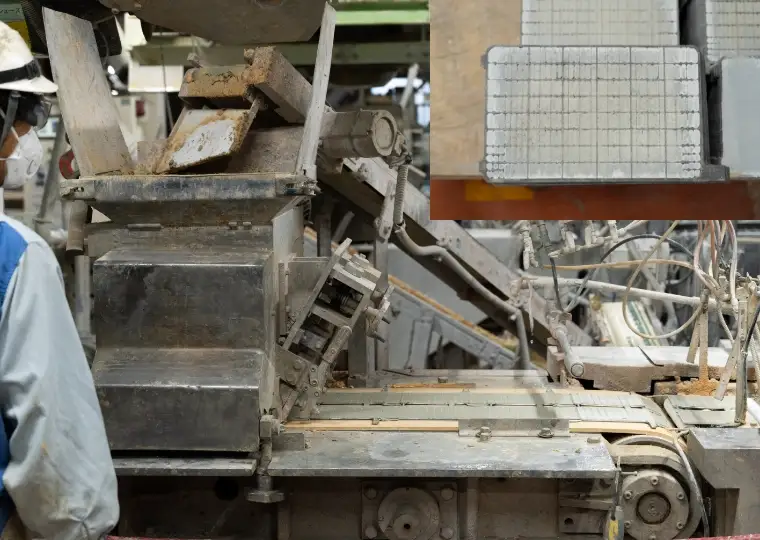
Lead paste is applied to the cast grids. After drying, plates are placed in a curing oven where oxidation is accelerated to improve adhesion between the paste and grid. Plate characteristics vary depending on grid size and paste formulation.
-
Resin Molding Process
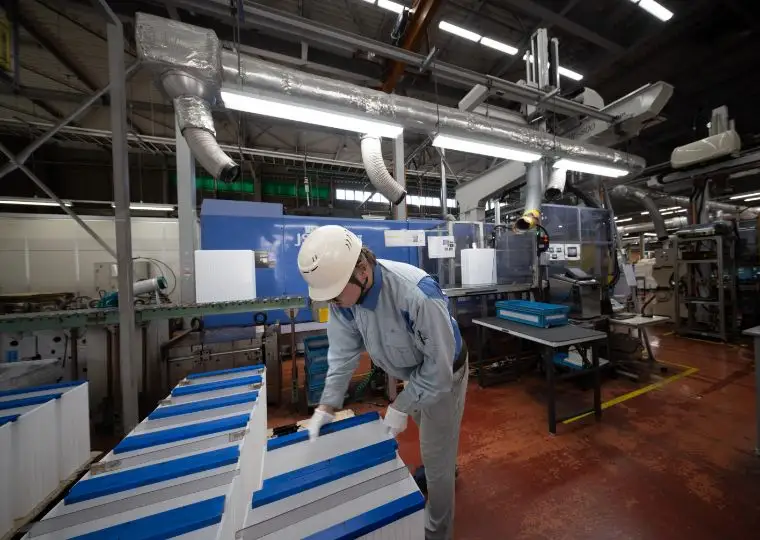
Resin battery containers (containers and top covers) are produced by injection molding.
-
Lead Parts Casting Process
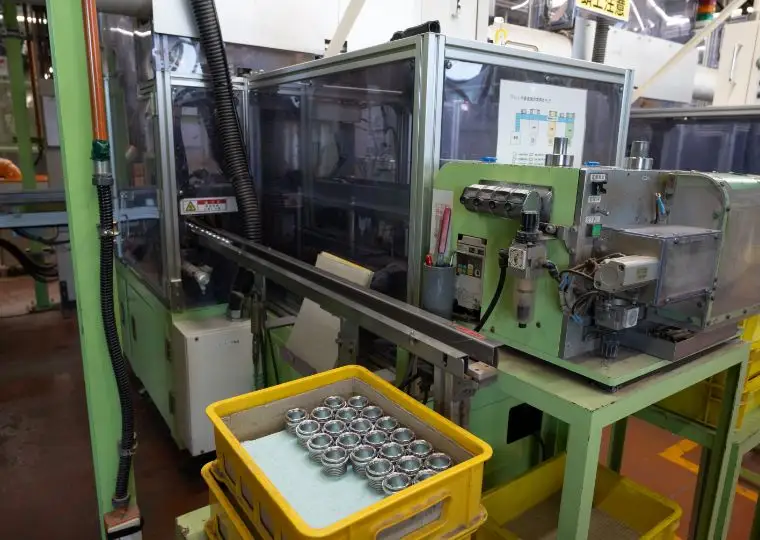
Lead parts are manufactured for terminal connections and for linking multiple plates together.
-
Cell Assembly Process
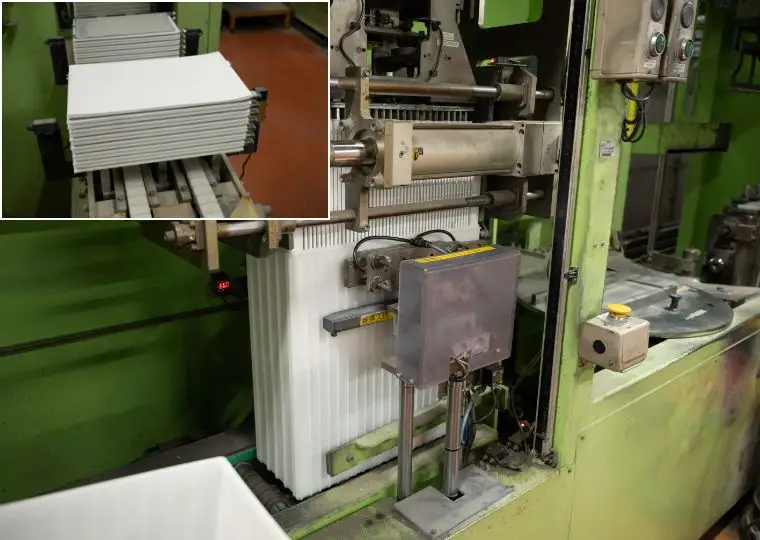
Positive and negative plates are alternately stacked and welded together to form plate groups. These groups are inserted into the container, and the case and lid are joined to ensure proper sealing. After that, terminal connections and other necessary processes are performed to complete the battery assembly.
-
Charging Process
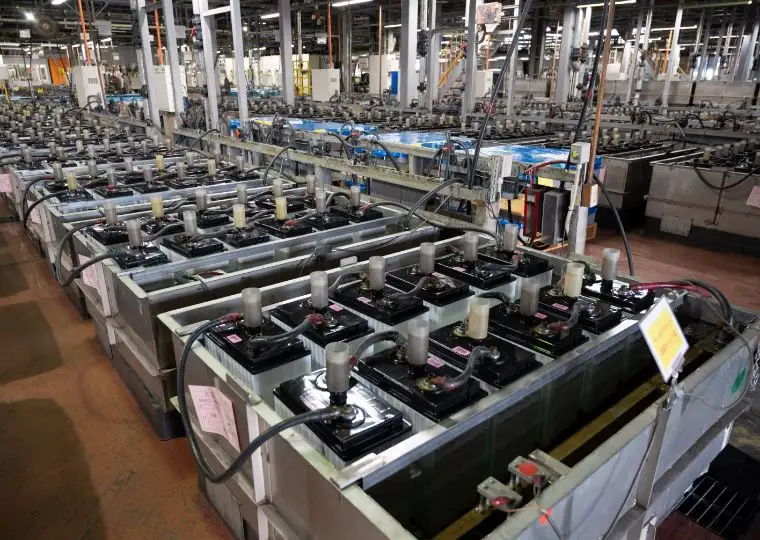
After the assembled lead-acid battery is filled with dilute sulfuric acid, an electric current is applied to the electrodes to charge the battery. During this process, chemical reactions occur within the electrodes: the positive electrode is converted into lead dioxide, while the negative electrode becomes spongy lead. Through these reactions, the battery becomes fully functional as a lead-acid storage battery.
-
Completion
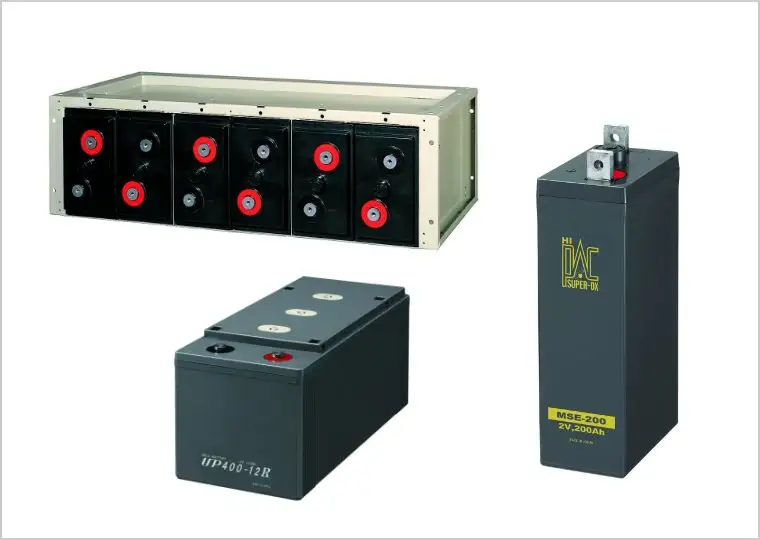
Final product is complete.
How Vented Electric Vehicle Batteries Are Made
-
Electrode Plate Process (Positive, Clad Type) – Lead Powder
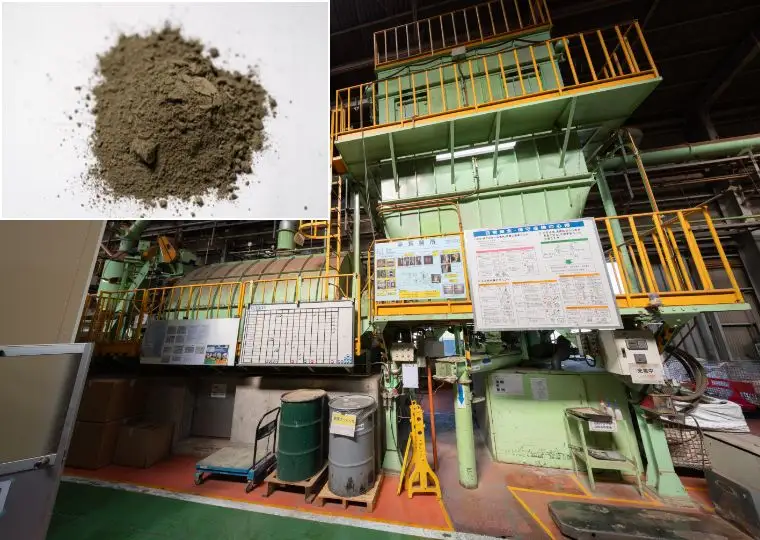
Lead powder is produced by melting lead ingots at high temperature to form spherical lead pieces. These are placed into a rotating drum, where air is supplied as the drum turns. The pieces collide with each other and undergo oxidation, gradually reducing them into a fine powder.
-
Electrode Plate Process (Positive, Clad Type) – Pressure Casting
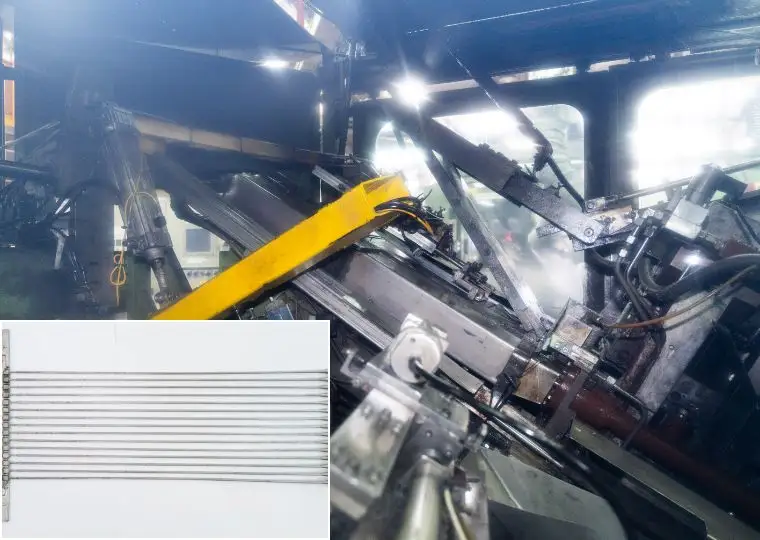
The positive plates for electric vehicle batteries require high corrosion resistance and durability, necessitating the use of a pressure die casting process. Molten lead is injected into a mold and solidified under high pressure to form a dense core.
-
Electrode Plate Process (Positive, Clad Type) – Filling
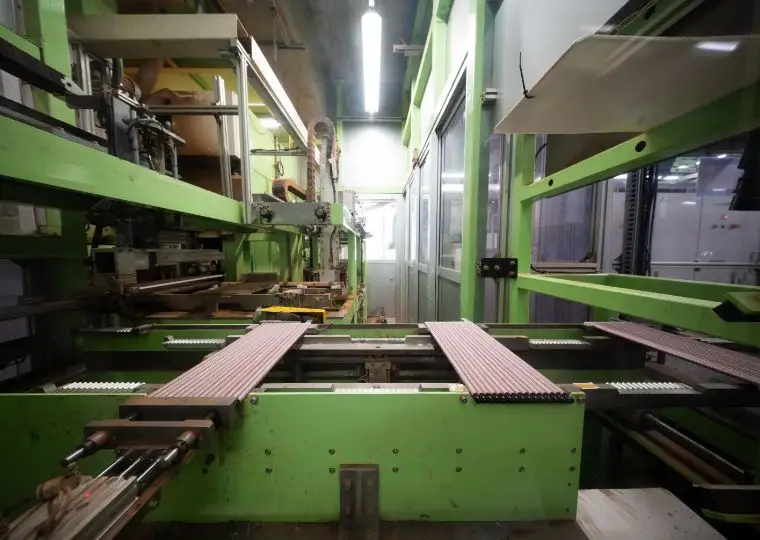
Insert the core rod into the glass tube, fill it with lead powder, seal it, and create the positive plate.
-
Electrode Plate Process (Negative, Paste Type) – Lead Powder
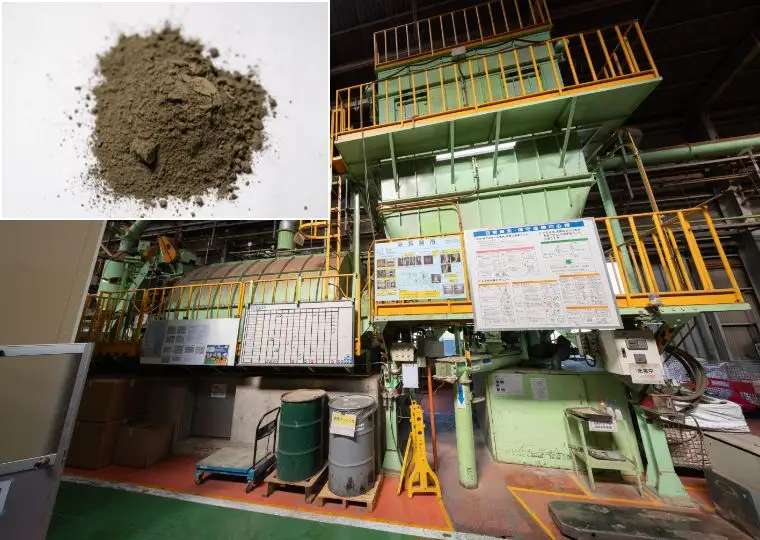
Lead powder is produced by melting lead ingots at high temperature to form spherical lead pieces. These are placed into a rotating drum, where air is supplied as the drum turns. The pieces collide with each other and undergo oxidation, gradually reducing them into a fine powder.
-
Electrode Plate Process (Negative, Paste Type) – Paste Mixing
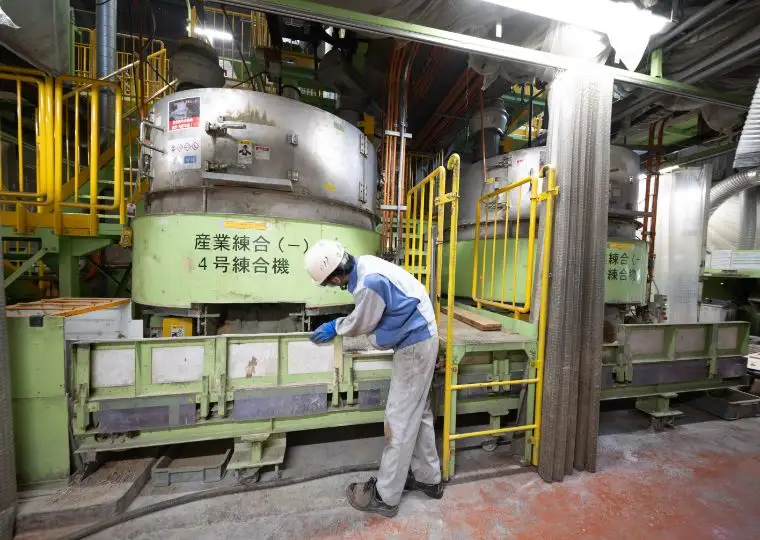
Lead powder is mixed with diluted sulfuric acid, water, and additives to create a chemical reaction that forms lead paste, which is used as the active material for both positive and negative electrodes.
-
Electrode Plate Process (Negative, Paste Type) – Grid Casting
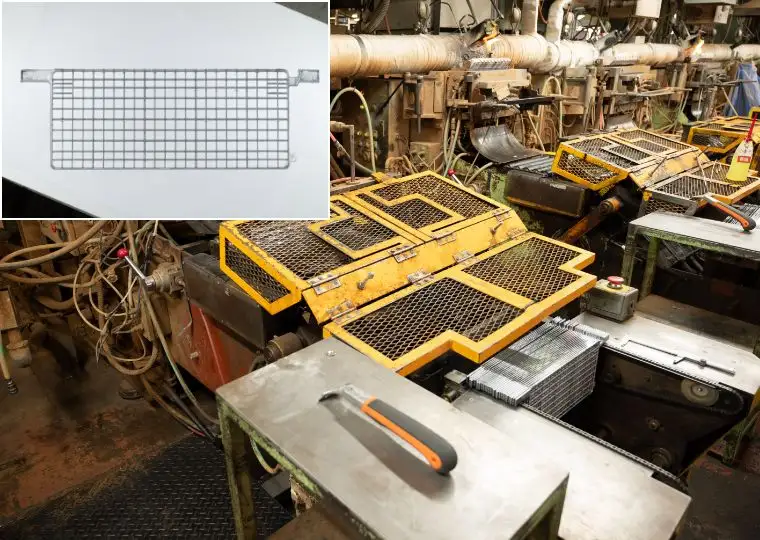
Lead alloys are melted and cast into grid molds, forming the substrate for the negative active material.
-
Electrode Plate Process (Negative, Paste Type) – Pasting & Curing
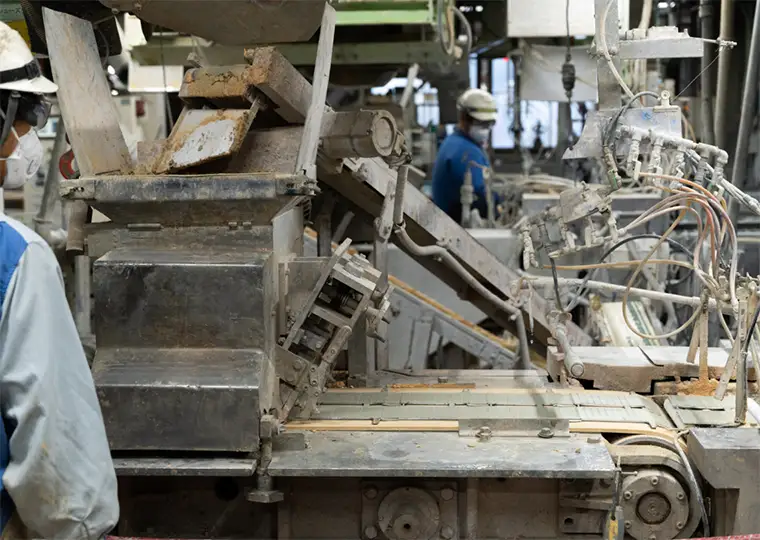
Lead paste is applied to the casting grid. After the paste is dried, oxidation is promoted in the curing oven to enhance adhesion between the grid and paste. The plates are divided into positive and negative electrodes, exhibiting different electrical characteristics depending on grid size, paste type, and other factors.
-
Resin Molding Process
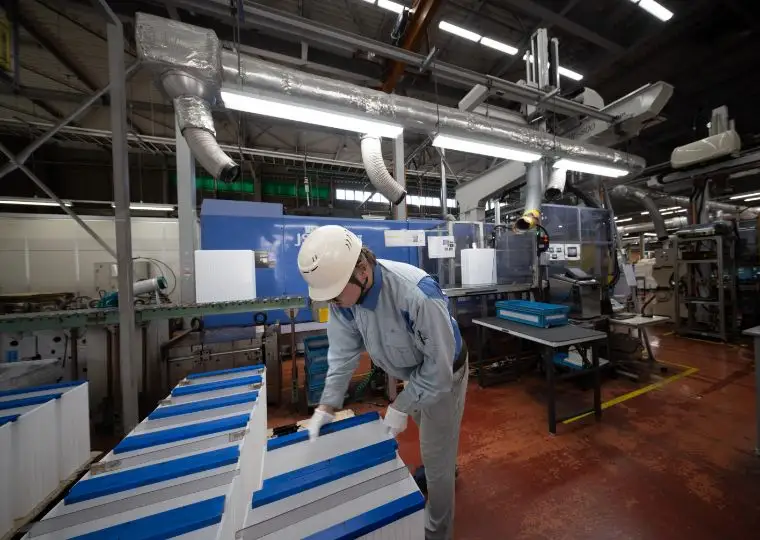
Resin battery containers (containers and top covers) are produced by injection molding. *Actual specifications and shapes may differ.
-
Cell Assembly Process
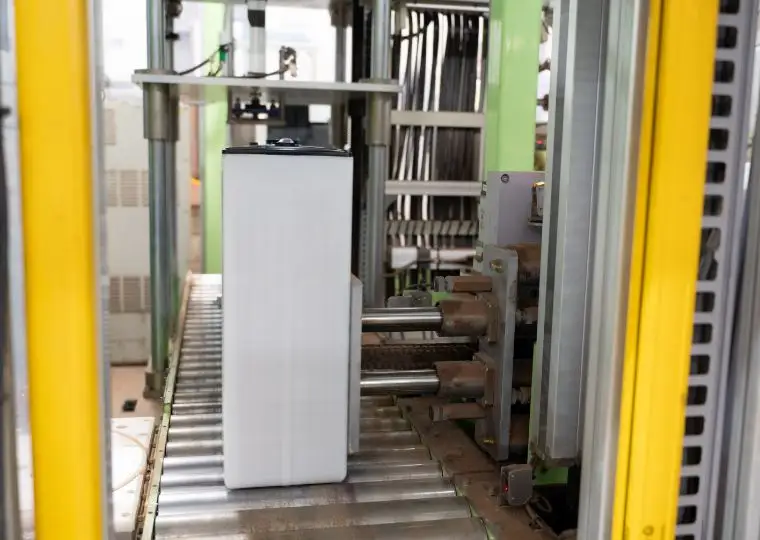
The positive and negative plates are alternately stacked and welded with lead components to form a plate group. This plate group is then inserted into the container, and the container and top cover are joined to ensure a proper seal. Following this, diluted sulfuric acid (the electrolyte) is injected, and the unit is charged, enabling it to function as a lead-acid battery.
-
Battery Pack Finishing Process
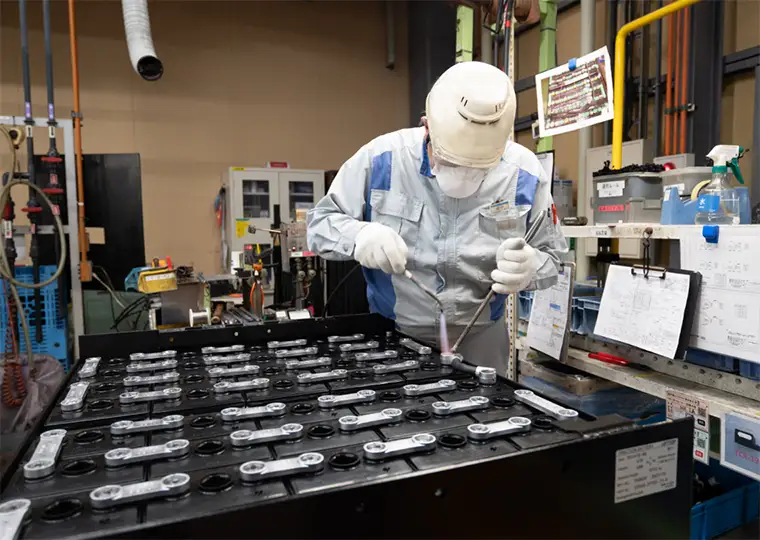
Multiple charged cells are installed into a steel case and connected in series by lead welding. After that, the required accessories are attached according to the customer's specifications, completing the traction battery for electric vehicles.
-
Completion
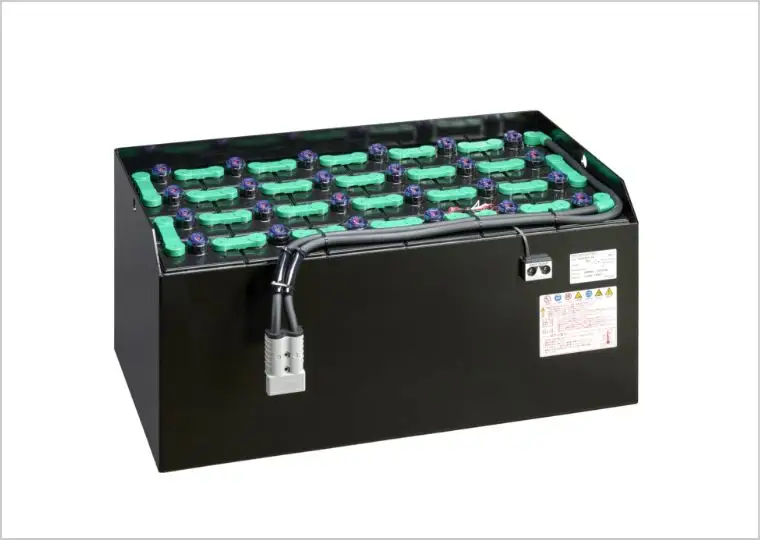
Final product is complete.