
Renewable Energy System Technologies Using Storage Batteries

Storage battery systems that support large-scale deployment of variable renewable energy with fluctuations in power output
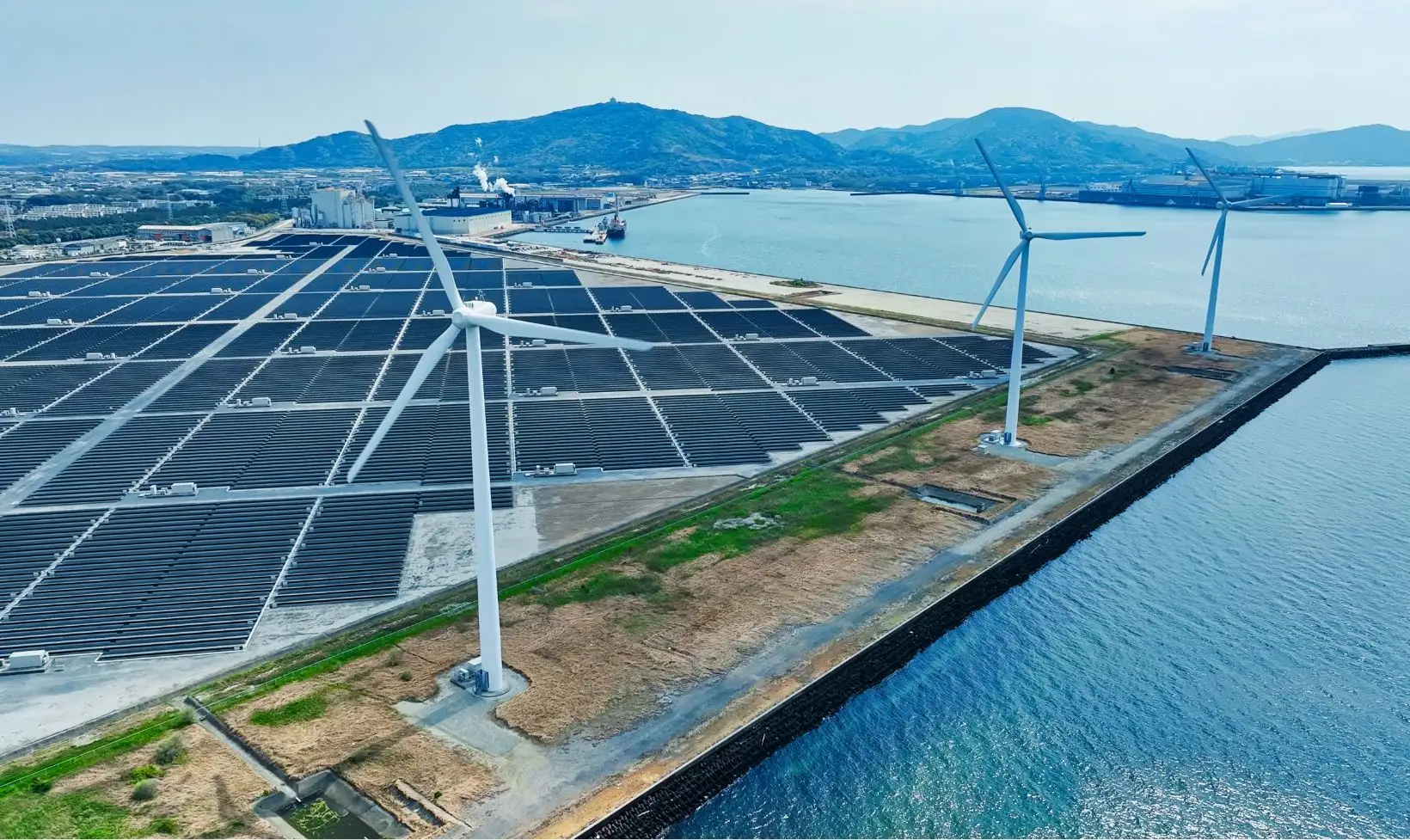
As the adoption of renewable energy increases, solar and wind power—the main sources of renewable electricity—face the challenge of fluctuating output depending on weather and seasonal conditions. To mitigate the impact of these fluctuations, the use of storage batteries is attracting attention.
At Energywith, we have developed a renewable-energy storage system—the Tuflong LL System—centered on cycle-use lead-acid batteries (Tuflong LL Series) that are well-suited for renewable energy applications. The system integrates peripheral equipment such as PCS (Power Conditioning Systems) and EMS (Energy Management Systems), and is being deployed for facilities such as buildings, convenience stores, and factories.
Furthermore, EW-EMS, our proprietary EMS scheduled for market release in 2025, analyzes operation data collected through remote monitoring to optimize electricity costs while enabling planned degradation management of storage batteries. This enhances system reliability, optimizes the battery lifecycle, and enables us to provide a one-stop solution—from system design and installation to operation—tailored to each customer’s usage conditions.
Core Technologies of the Renewable Energy Storage System
Storage System (Storage Batteries + PCS)
The Tuflong LL Series is a lead-acid battery designed for long-life cycle applications. While its energy density is lower than that of lithium-ion batteries, it offers the inherent advantages of lead-acid batteries—high safety due to aqueous electrolyte and excellent recyclability. Since its launch in 2001, the series has continued to evolve in long-life performance and high output, and a compact model is scheduled for release in 2026.
Control Systems & Simulation
The Tuflong LL System consists of the Tuflong LL Series, PCS, and EMS.
By using EMS (EW-EMS), the system enables peak-cut control by shifting the timing of solar power generation, grid power purchasing, and electricity consumption, realizing the reduction of power costs.
For system installation, we conduct simulations to quantitatively evaluate expected benefits. These simulations are based on HEMS (Home Energy Management System) developed by NEDO (New Energy and Industrial Technology Development Organization) and are used to design the optimal system configuration for each customer.
In addition, EW-EMS—scheduled for launch in FY2025—will support peak-cut control, and EW-EMS ver.2, to be introduced in FY2026, will incorporate a battery degradation estimation function.
Monitoring System
The Tuflong LL System is equipped with a remote monitoring system that allows our service team to continuously check system health, performance, and economic efficiency, and take immediate action if any abnormality is detected.
In coordination with EW-EMS ver.2, the system prevents premature battery degradation and supports operation according to design specifications, thereby optimizing total system lifetime.
Future Developments
We have developed the Tuflong LL System centered on the Tuflong LL Series, enhancing overall reliability through remote monitoring and EMS integration. Going forward, we will expand our product lineup and advance operational support using AI, promoting solutions aligned with DX and GX initiatives.