Safe and High-Efficiency Renewable Energy Storage Support
Renewable Energy Integration for Industrial Use Enabled by the Tuflong LL Storage Battery
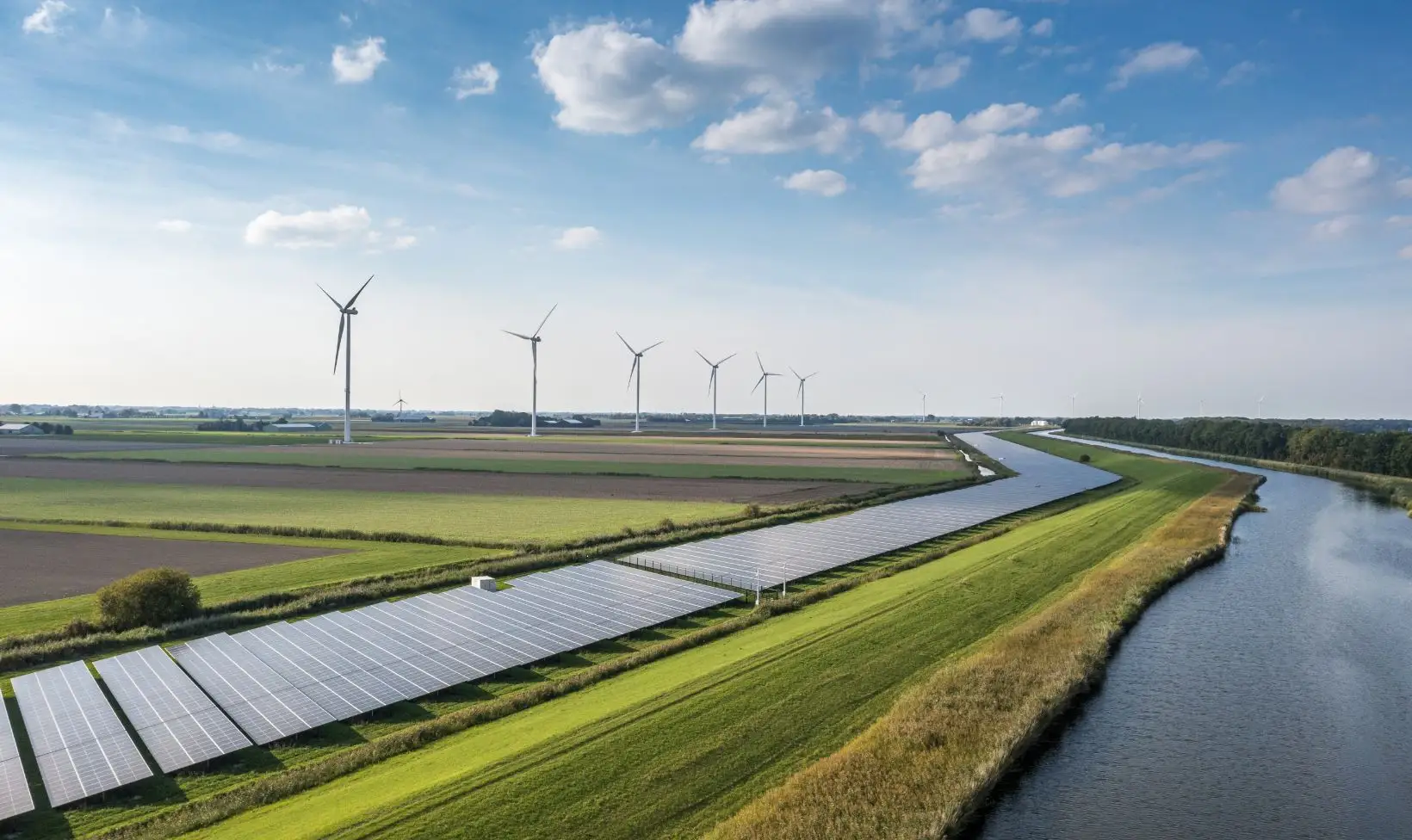
Leveraging decades of expertise in battery technology, Energywith provides solutions that ensure the stable and effective use of renewable energy.
The Tuflong LL battery—designed specifically for renewable energy applications—offers high safety, long life, recyclability, and Japan-made quality, with over 20 years of proven field performance.
It contributes to a sustainable future by reducing electricity costs during normal operation and supporting business continuity (BCP) during emergencies.
Features of the Renewable Energy Battery & System
- Exceptional Safety with Low Risk of Fire
- Installable in Diverse Locations – No Air Conditioning Required
- Nearly 100% Recyclable
- Maximizing System Benefits with Our Proprietary EMS
Exceptional Safety with Low Risk of Fire
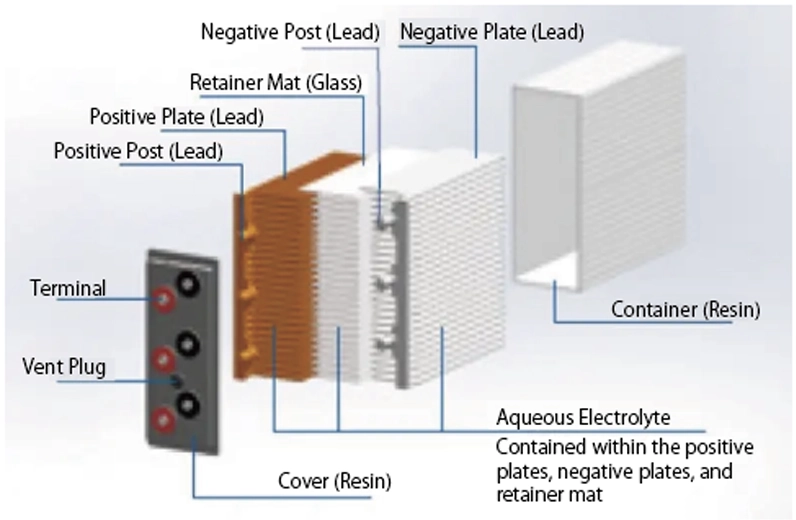
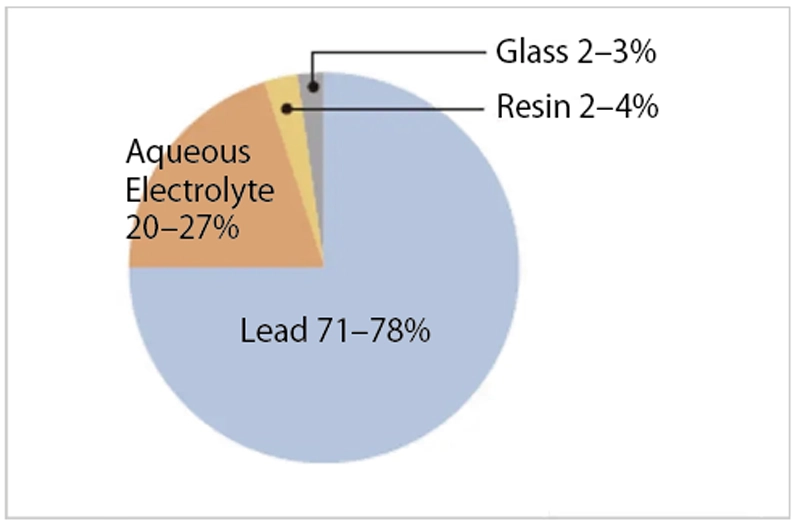
Non-flammable aqueous electrolyte
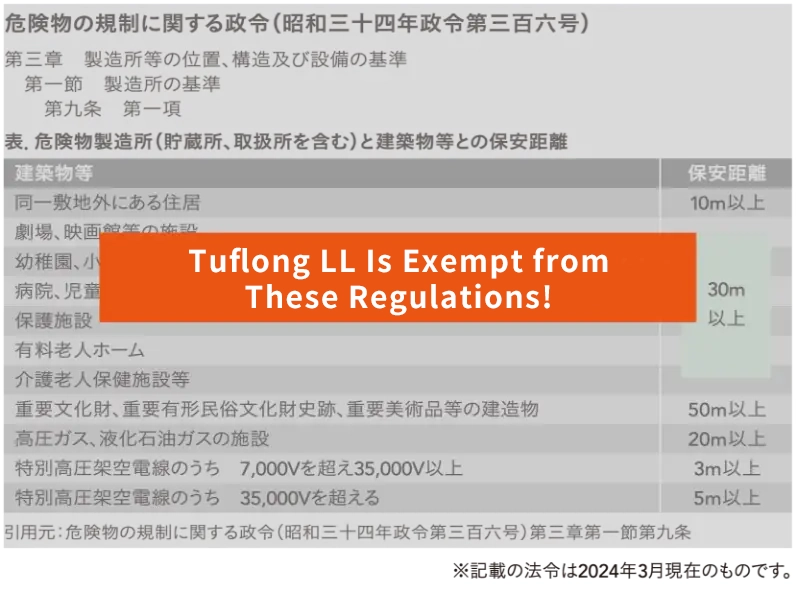
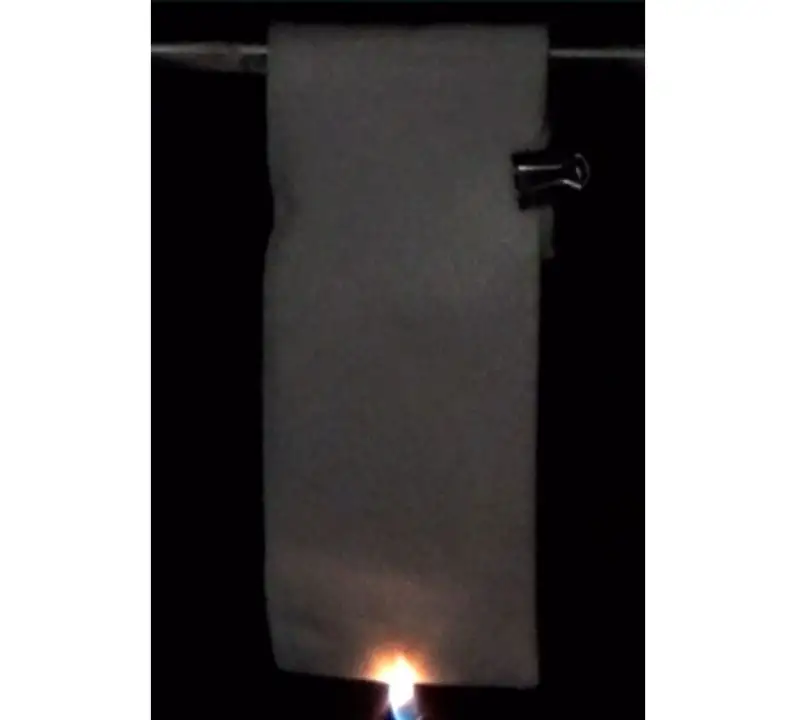
Tuflong LL uses an aqueous electrolyte, which—as demonstrated in testing—does not ignite even when exposed to flame.
Because the battery contains no flammable materials and is not classified as hazardous under Japan’s Fire Service Act, it minimizes the risks of fire, ignition, and spread. This allows safe installation in densely populated areas, indoors, or underground. Energywith’s lead acid batteries are trusted even in nuclear power plants and other facilities that demand the highest levels of safety and reliability.
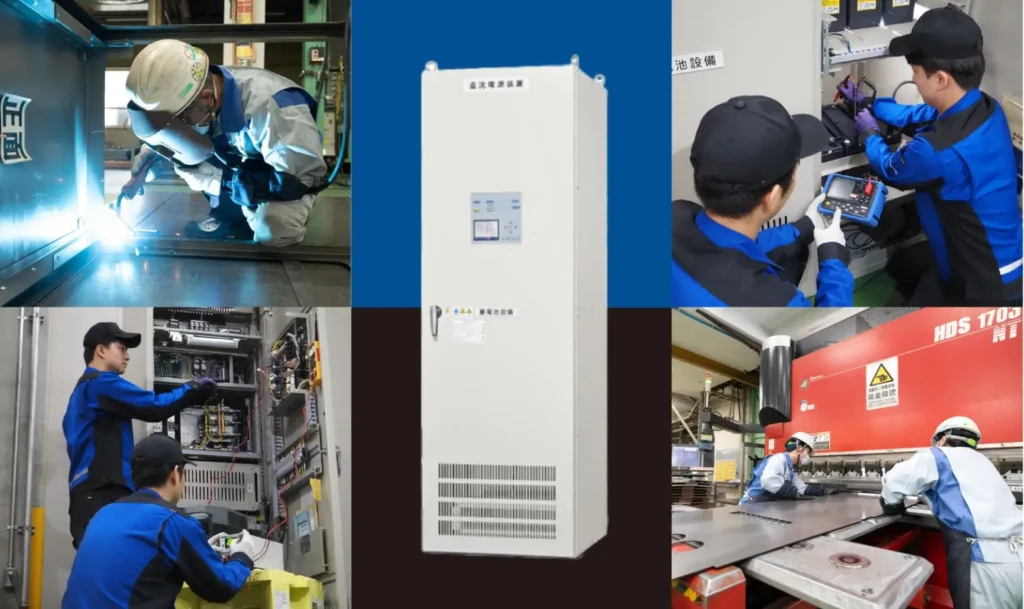
Remote monitoring to detect degradation or abnormalities
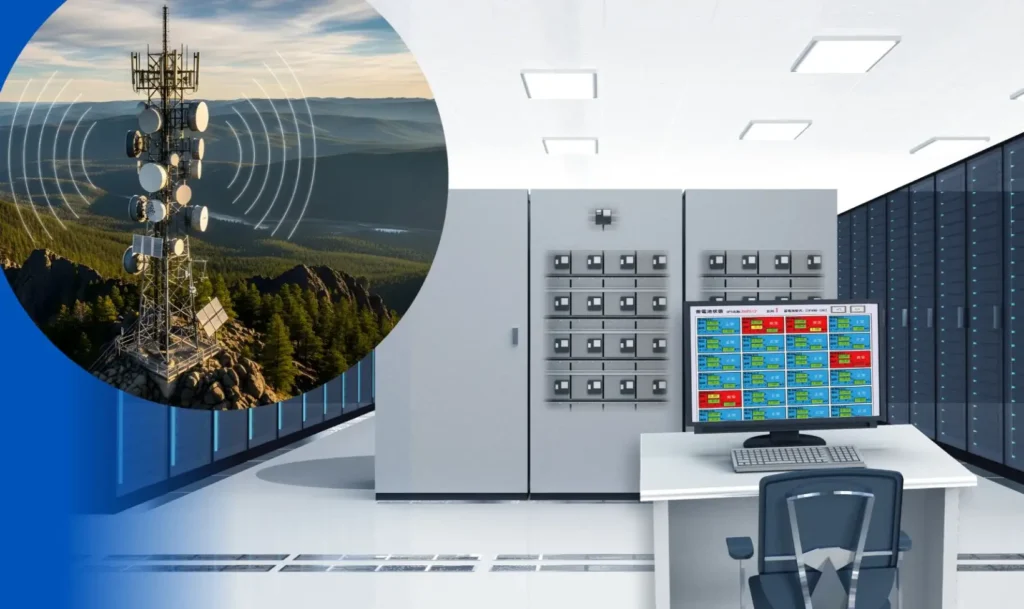
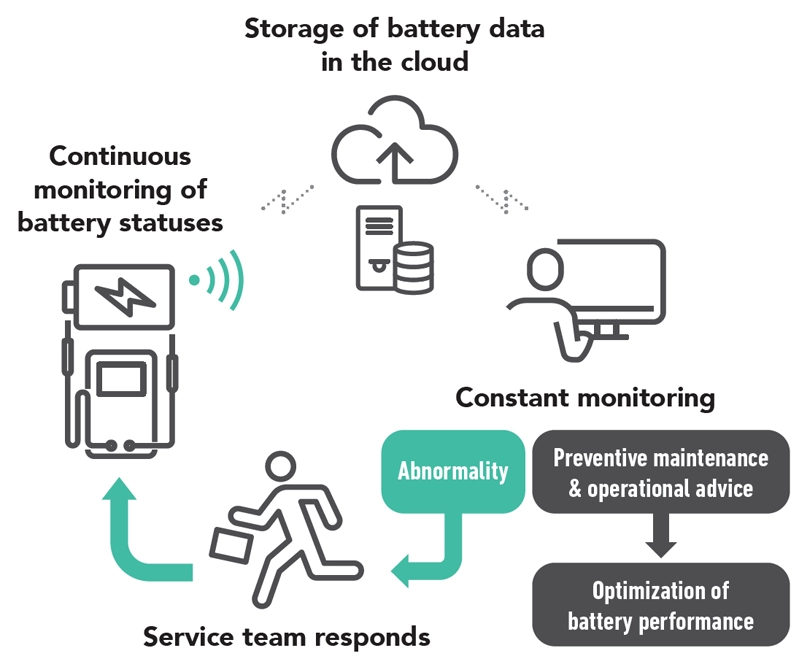
The system continuously monitors battery conditions via the cloud, enabling quick detection of abnormalities and rapid response from our service team.
Remote monitoring supports installations in remote or unmanned locations, enabling preventive maintenance and operational advice to avoid potential failures.
By optimizing maintenance cycles and reducing unnecessary service costs, it ensures safe and stable operation over the long term.
Installable in Diverse Locations – No Air Conditioning Required
Flexible installation enabled by low ignition and fire spread risk
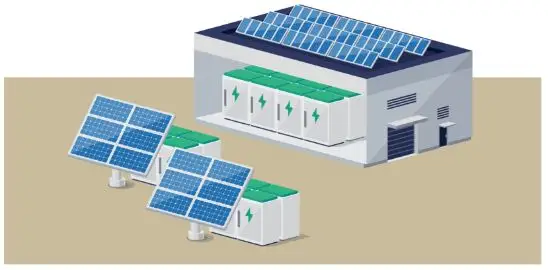
Tuflong LL can be installed at ambient temperature and is made of non-hazardous materials, meaning it is not restricted by hazardous-material regulations. Its excellent handling characteristics allow flexible deployment regardless of location or environmental conditions. Actual installations include:
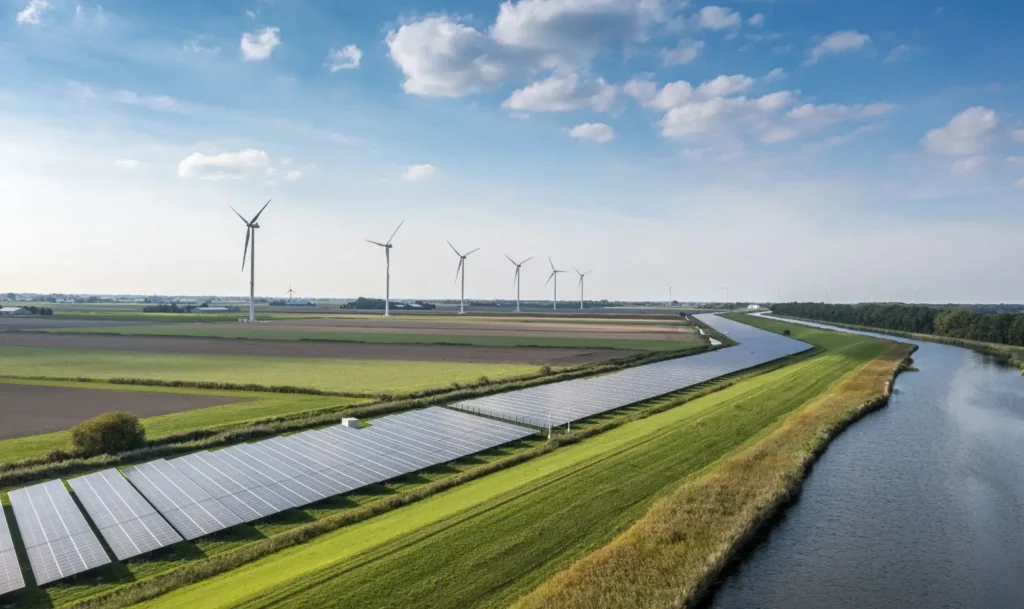
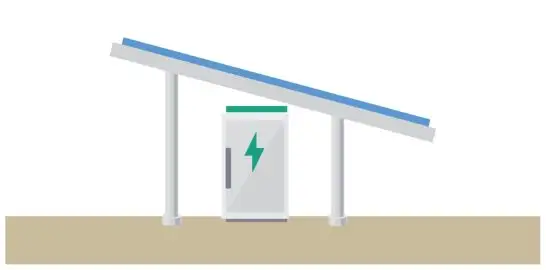
Under solar panels
Utilizes the dead space and enables high-efficiency renewable energy operations without additional land acquisition.
Inside buildings
Because no hazardous materials are used, indoor installation is safe and space-efficient.
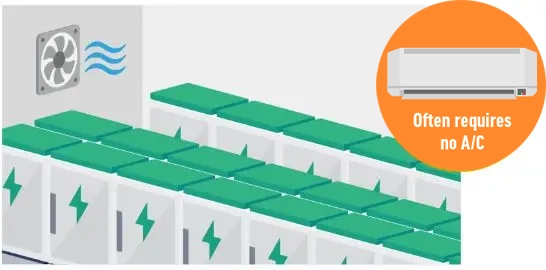
Without air-conditioning systems
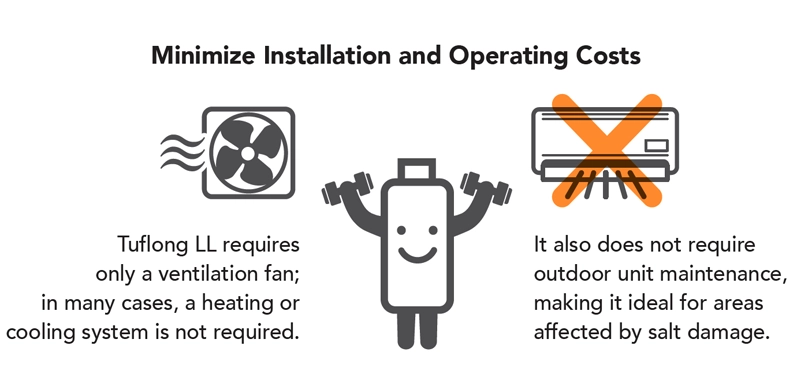
Stable operation at ambient temperature reduces the need for HVAC equipment, lowering both electricity and maintenance costs.
Nearly 100% Recyclable
Reliable Recycling with a Nearly 100% Material Recovery Rate
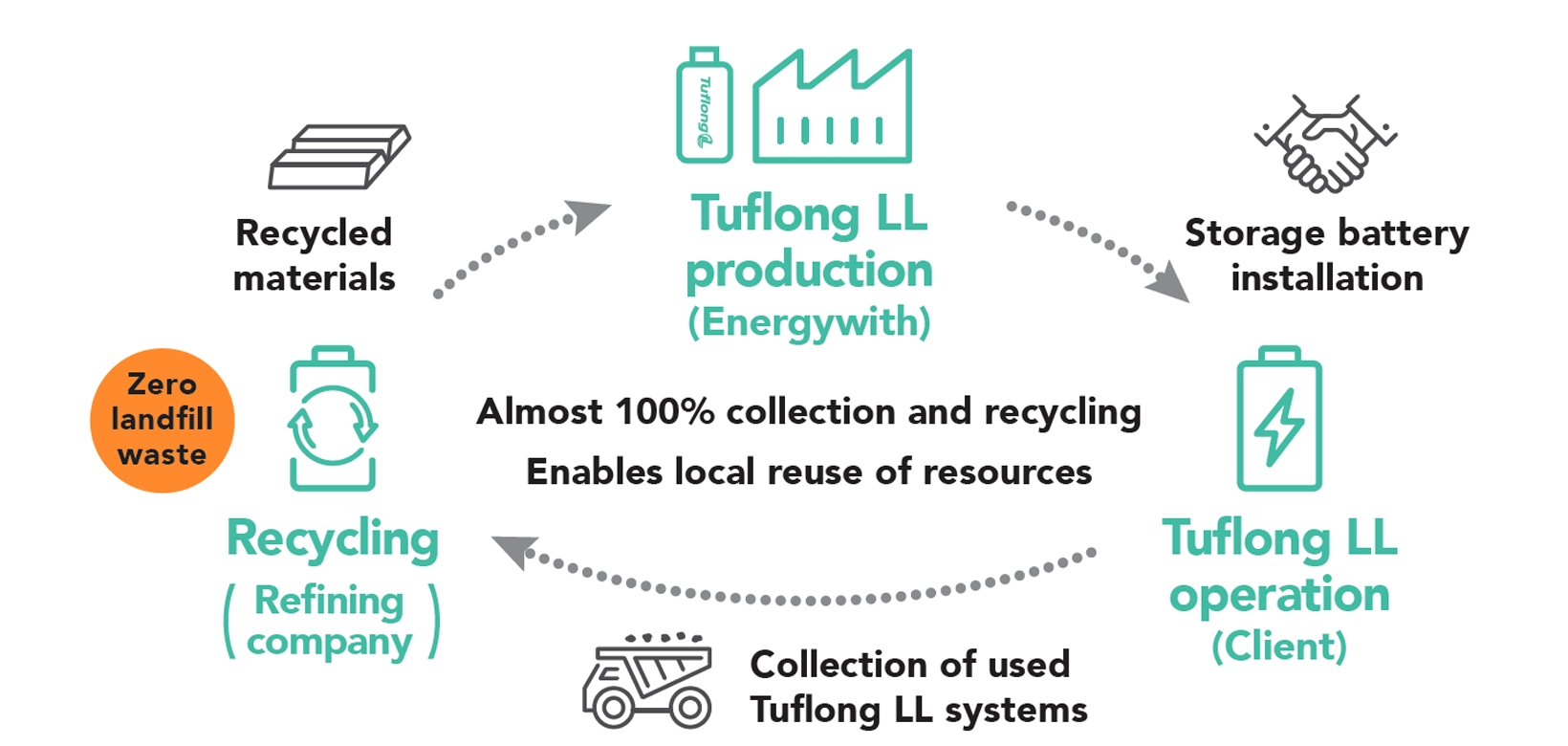
Energywith’s Tuflong LL batteries are collected under the national wide-area certification scheme and achieve an exceptionally high material recovery rate—nearly 100%. The recovered lead, resin, and other materials are reused as recycled raw materials by domestic smelters, forming a closed-loop recycling system. This approach minimizes waste generation and reduces CO₂ emissions* to less than half compared to using newly mined raw materials. By maintaining domestic circulation, the system ensures both stable supply and short lead times, delivering an environmentally responsible and highly sustainable energy storage solution.
Boliden Carbon footprint of Boliden Main Metals / Copper, Nickel matte, Zinc, Lead / September 2021 carbon-footprint-of-boliden-main-metals_2021_executive-summary.pdf
Maximizing System Benefits with Our Proprietary EMS (Energy Management System)
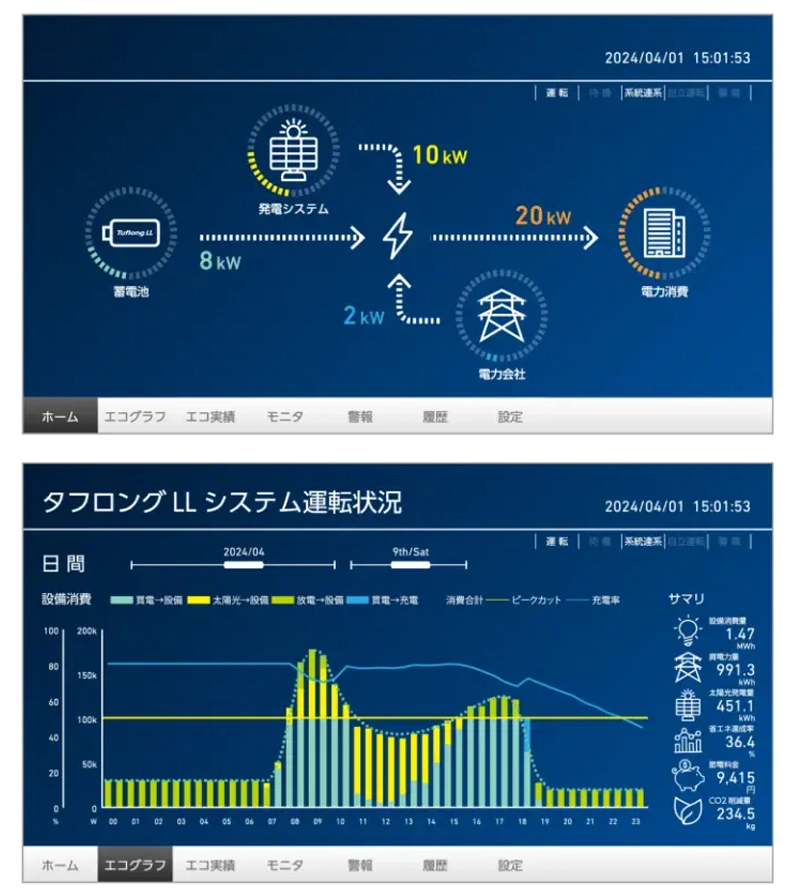
Visualizing System Operation
The Tuflong LL system provides real-time visibility of generation, purchased electricity, and the battery’s charge/discharge status through its standard display software. With numerical and graphical views of energy flow, users can quantify reductions in purchased electricity and CO₂ emissions and optimize the system while clearly seeing the effects of installation.
System Design Tailored to Each Customer
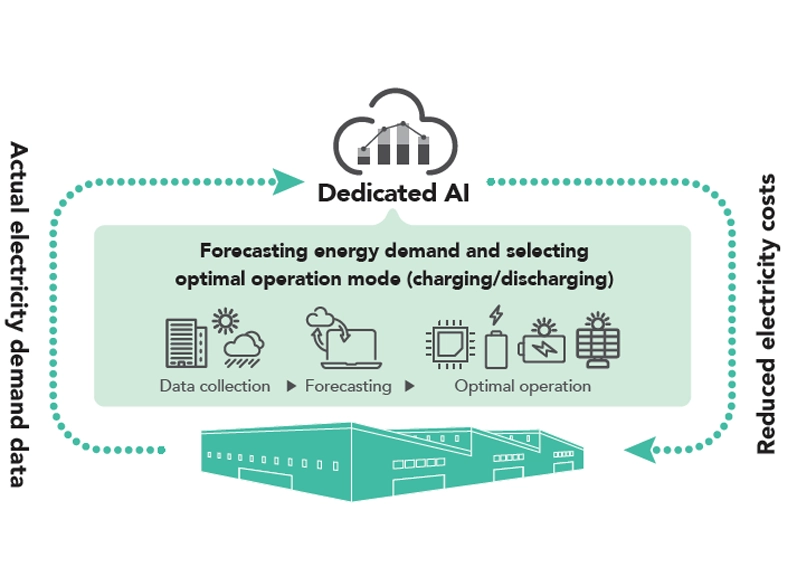
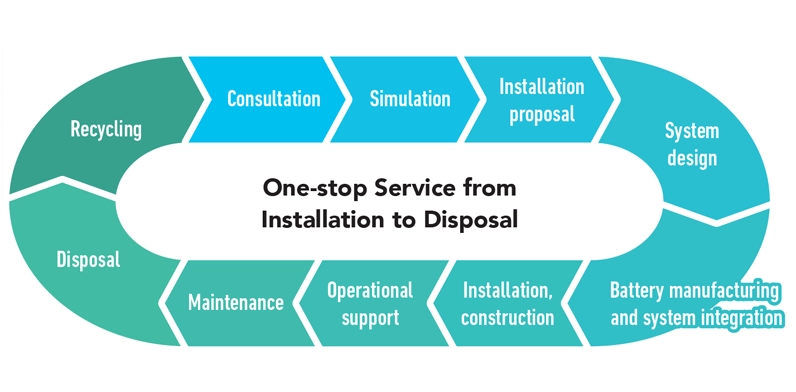
Energywith conducts proprietary simulations based on weather data, electricity bills, electric power consumption patterns, and other conditions to propose an optimal system configuration tailored to each installation environment and operational objective. Additionally, AI-based control enables highly reliable operation—even during disasters or power outages—ensuring stable and flexible performance.
Case Studies
Real-world examples showing how Tuflong LL contributes to building a sustainable future.
CASE 1 How Can We Cut Daily Energy Costs?
“I want to install solar panels, but I’m not sure if it will really lower my electricity bills. And what about unstable weather…?”
――The Tuflong LL system answers these concerns.
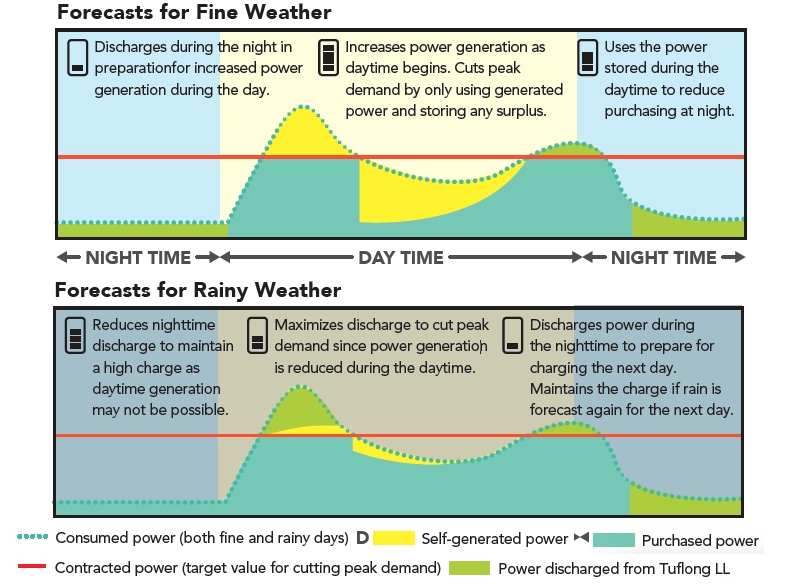
By storing excess electricity and supplying it during shortages, the system reduces both basic and usage-based electricity charges. Through proprietary simulations and demand-forecasting models, it operates efficiently in coordination with solar and wind power, automatically adapting to weather fluctuations.
CASE 2 How Can We Lower Both Installation and Operating Costs?
“Even if electricity bills go down, it won’t make sense if installation or maintenance costs are too high.”
――Tuflong LL minimizes total cost from installation to end-of-life.
Because it can operate at ambient temperature, no air-conditioning equipment is required—reducing both initial investment and ongoing operational costs. After end-of-life, Energywith collects the batteries, reducing the customer’s management burden.
CASE 3 Can We Install a System in a Basement?
“We don’t have much space left. And I’m also worried about safety.”
――Unlike lithium-ion or NaS batteries, Tuflong LL contains no hazardous materials and is therefore not subject to fire-service safety distance regulations.
Its high level of safety enables installations in confined spaces such as basements and indoor areas. There are proven installations in commercial building basements, and flexible layouts—such as placing the battery on the first floor while using upper floors or rooftops for other purposes—allow effective use of limited land.