
How to Replace A Battery
Replacement Procedure for Passenger Vehicles and Commercial Vehicles
Replacement Method for Passenger Vehicles (Tuflong EN)
— When a Vent Cap Is Included
Applicable models: NA360LN19A, ENA375LN29A, ENALN29A, ENA390LN39A, ENALN39A
Replacement Method for Passenger Vehicles (Tuflong EN)
— When a Vent Extension Tube Is Included
Applicable models: ENALN09A, ENALN49A, ENALN59A, ENALBN29A, ENALBN39A
Replacement Procedure for Passenger Vehicles and Commercial Vehicles
Safety Precautions
Items that could lead to personal injury or property damage if ignored or used incorrectly are displayed in three levels: Danger, Warning, and Caution.
| DANGER | Indicates an imminently hazardous situation which, if not avoided, will result in death or serious injury. |
| WARNING | Indicates a potentially hazardous situation which could result in death or serious injury, or where minor injury or property damage is likely to occur. |
| CAUTION | Indicates a situation which may result in minor injury or property damage, but not serious injury. |
Safety Precautions
Please observe the following precautions to ensure safe battery replacement.
- The battery contains electrolyte (diluted sulfuric acid). Do not allow children or any person who does not fully understand battery handling and associated hazards to touch it. Contact may cause blindness or burns.
- When handling the battery, always wear protective goggles and rubber gloves. Contact with the electrolyte may cause blindness or burns.
- Before handling the battery, touch a metal other than the battery such as part of the vehicle body to discharge static electricity. Static electricity may cause sparks, which can ignite or cause an explosion.
When replacing the battery, hydrogen gas emitted from the battery may ignite and cause an explosion.
Please observe the following precautions:
- Do not bring fire sources near the battery (such as cigarettes, grinder sparks, or heaters).
- When installing the battery, do not short-circuit the positive (+) terminal and negative (–) terminal, or the positive terminal and the vehicle body, with metal tools.
- When connecting the vehicle’s cable terminals to the battery terminals, tighten the nuts securely.
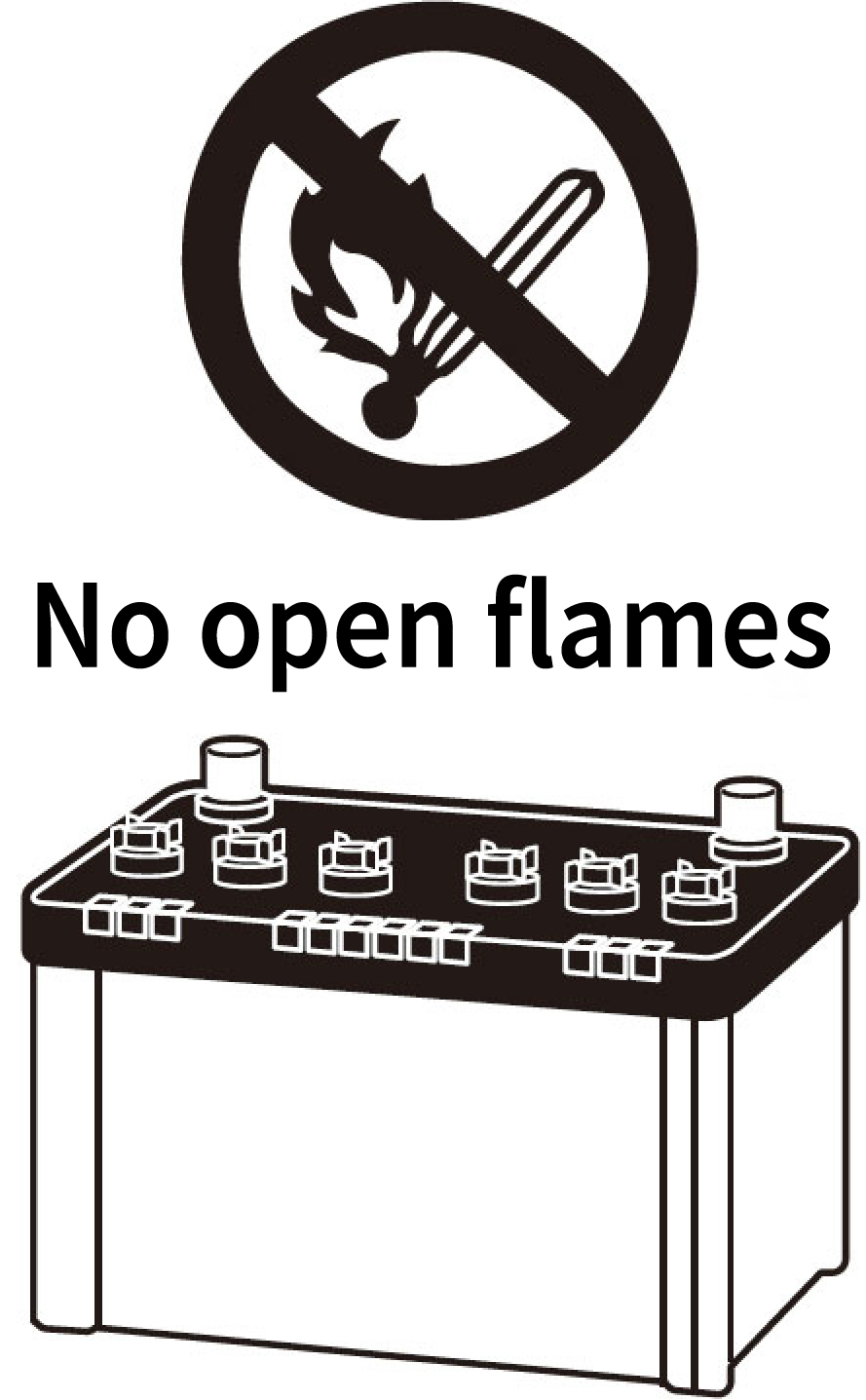
Improper handling of the battery may cause ignition, explosion, rupture, electrolyte leakage, or vehicle damage.
Follow the instructions below:
- When replacing the vehicle’s battery, stop the engine and remove the ignition key.
*For vehicles with smart keys, set the engine switch to the LOCK or OFF position. - Do not remove or install the battery while lights or other electrical switches are in the ON position.
- When connecting the vehicle’s cable terminals to the battery, do not reverse the positive (+) and negative (–) terminals.
- Do not modify the battery terminals or block the vent holes of the battery’s vent plugs.
Improper handling of the battery may cause fire or corrosion due to electrolyte leakage.
Please observe the following:
- Do not connect electrical devices directly to the battery.
- Secure the battery firmly using the mounting brackets.
- Do not apply any oils or greases to the battery terminals other than terminal grease.
- Handle the battery horizontally without tilting it, and do not install it on an inclined surface.
- If the battery is equipped with a heat shield, reinstall it correctly after battery replacement.
- Reinstall the terminal covers correctly after battery replacement.
Vehicles equipped with electronic devices that have memory functions (navigation systems, etc.) may lose stored settings when the battery is removed.
Be sure to read the vehicle owner’s manual before replacing the battery.
If you use an auxiliary power supply (commonly connected to the cigarette lighter) to back up memory, do not allow the vehicle’s positive (+) cable terminal to contact the negative (–) terminal or the vehicle body, which is grounded to the negative terminal, when removing the battery. If memory is erased, please consult the vehicle dealer.
- When replacing the battery, always follow the vehicle owner’s manual or service manual.
- Depending on the vehicle model, a special tool may be required for “setup”*.
* Setup refers to initialization of the vehicle computer (ECU, etc.).
Removing the Old Battery
- Record the installed orientation of the battery (positions of the positive (+) and negative (–) terminals).
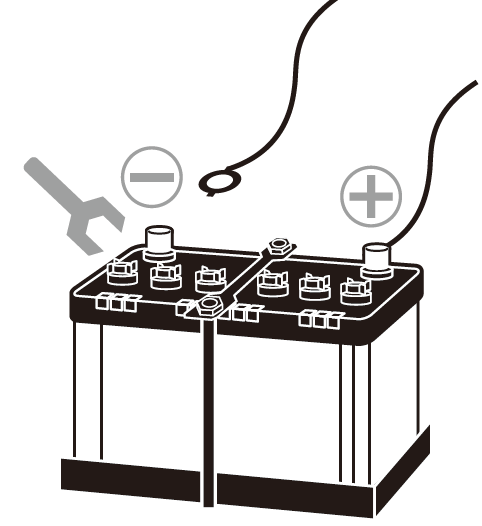
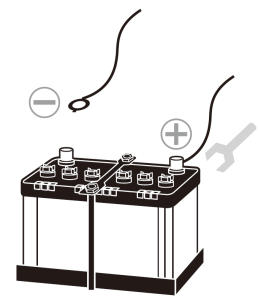
- First, loosen the nut on the vehicle’s negative (–) cable terminal (there may be two terminals), and remove the cable terminal from the battery’s negative terminal (see illustration on the right).
- Next, remove the terminal cover from the vehicle’s positive (+) cable terminal, loosen the nut, and remove the cable terminal from the battery’s positive terminal.
- If the vehicle is equipped with a fluid-level sensor, record its mounting position (where it was installed on the battery), and remove it from the battery. Electrolyte may adhere to the removed fluid-level sensor, so cover it with a cloth to prevent contact with the vehicle.
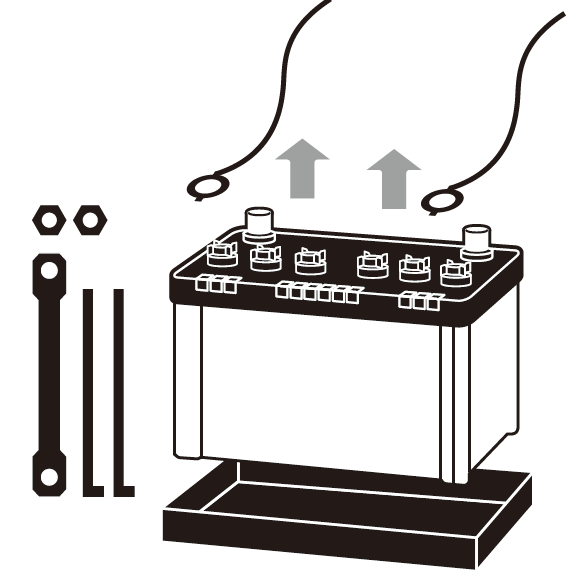
- Loosen the battery mounting bracket and remove the battery while keeping it level (see illustration on the right).
- For batteries from which the fluid-level sensor has been removed, handle them carefully to avoid spilling electrolyte.
- The battery is heavy—be careful to prevent dropping or injuring yourself when moving it.
- Used batteries are recycled as raw materials. Do not discard them as-is; consult the retailer where you purchased the new battery.
- If the cable terminals are corroded, clean them using a wire brush or fine-grit sandpaper.
Installing the New Battery
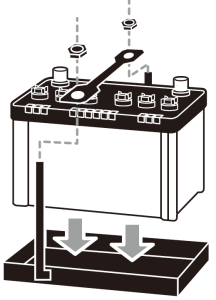
- Confirm that there are no foreign objects on the battery tray. Place the new battery on the tray so that the positive (+) and negative (–) terminals match the orientation of the removed battery. Secure the battery firmly with the mounting bracket so that it does not move (see illustration on the right).
For B-size and D-size batteries equipped with a carrying handle:
Set the battery in its designated position, and remove the handle before securing with the mounting bracket.
For B-size batteries, slide the handle downward along the short side of the battery.
For D-size batteries, twist the handle attachment to remove it. - If the old battery had a fluid-level sensor, install it in the same position on the new battery.
- Attach the vehicle’s positive (+) cable terminal to the battery’s positive terminal, and tighten the nut securely (see illustration on the right).
- Reinstall the terminal cover onto the vehicle’s cable terminal.
- Next, attach the vehicle’s negative (–) cable terminal to the battery’s negative terminal and tighten the nut securely.
- To prevent rust on the metal parts of the cable terminals, apply a thin layer of grease—it is effective in preventing corrosion.
For vehicles equipped with an electronic lock, the lock may automatically engage once the replacement battery is installed after removal of old battery.
Be sure to remove the key and keep the windows open while working.
Replacement Method for Passenger Vehicles (Tuflong EN)
When a Vent Cap Is Included
Safety Indications
Safety-related matters that could lead to personal injury or property damage if ignored or handled incorrectly are shown in three levels: Danger, Warning, and Caution.
| DANGER | Indicates a situation where death or serious injury is expected to occur imminently. |
| WARNING | Indicates a situation where death or serious injury may occur, or where the probability of minor injury or property damage is high. |
| CAUTION | Indicates a situation where the likelihood of serious injury is low, but minor injury or property damage may occur. |
Safety Precautions
Please observe the following precautions to ensure safe battery replacement.
- The battery contains electrolyte (diluted sulfuric acid). Do not allow children or others who do not fully understand the proper handling and hazards of batteries to touch it. Contact may cause blindness or burns.
- When handling the battery, wear protective goggles and rubber gloves.
Contact with the electrolyte may cause blindness or burns. - Before handling the battery, touch metal other than the battery (such as the vehicle body) to discharge static electricity.
Static electricity may cause sparks, which can lead to ignition or explosion.
Precautions When Replacing the Battery
When replacing the battery, hydrogen gas emitted from the battery may ignite and explode.
Please observe the following precautions:
- Do not bring fire sources near the battery (such as lit cigarettes, grinder sparks, or heaters).
- When installing the battery, do not short-circuit the positive (+) and negative (–) terminals, or the positive terminal and the vehicle body, with metal tools.
- For vehicles equipped with a vent tube, firmly insert the L-shaped pipe of the vehicle-side vent tube into the battery’s vent hole.
In addition, firmly insert the included vent cap into the unused vent hole on the opposite side. - If the insertion is loose, hydrogen gas may accumulate inside the vehicle, increasing the risk of explosion due to an external ignition source.
- When connecting the vehicle’s cable terminals to the battery terminals, tighten the nuts securely.
Improper handling of the battery may cause ignition, explosion, rupture, electrolyte leakage, or vehicle damage.
Be sure to follow the instructions below:
- When replacing the vehicle’s battery, stop the engine and remove the ignition key.
*For vehicles with smart keys, set the engine switch to the LOCK position or OFF position. - Do not remove or install the battery while the lights or other electrical switches are in the ON position.
- When connecting the vehicle’s cable terminals to the battery, do not reverse the positive (+) and negative (–) terminals.
- Do not modify the battery terminals or block the vent holes of the battery’s vent plugs.
Improper handling of the battery may cause fire or corrosion due to electrolyte leakage.
Please observe the following:
- Do not connect electrical devices directly to the battery.
- Secure the battery firmly using the mounting brackets.
- Do not allow oils or greases other than terminal grease to contact the battery terminals.
- Handle the battery horizontally without tilting, and do not install it on an inclined surface.
- If the battery is equipped with a heat shield, reinstall it correctly after replacement.
- After replacing the battery, reinstall the terminal covers correctly.
If an auxiliary power supply is connected to the vehicle circuit to back up memory (commonly through the cigarette lighter port), do not allow the vehicle’s positive (+) cable terminal to contact the negative (–) terminal or the vehicle body, which is grounded to the negative terminal, when removing the battery. If memory data is lost, consult the vehicle dealer.
- Always follow the vehicle owner’s manual and service manual when replacing the battery.
- Depending on the vehicle model, a setup procedure* using a dedicated tool may be required.
* Setup refers to initialization of the vehicle computer (ECU, etc.).
Removing the Old Battery
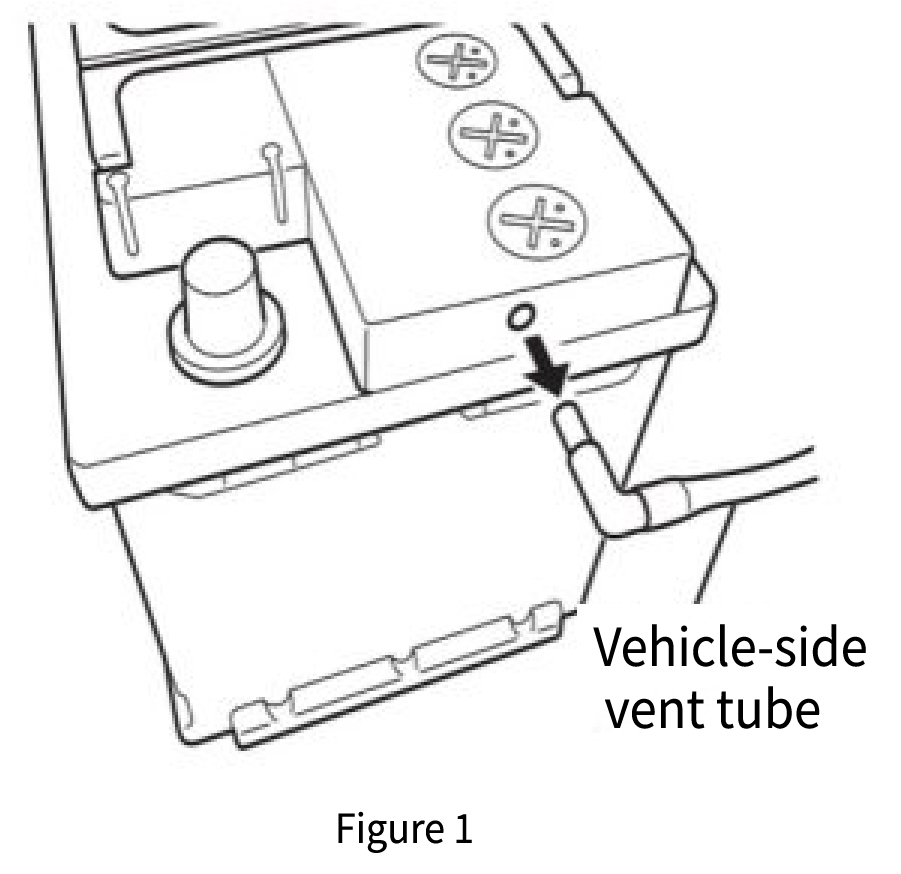
- If a vent tube from the vehicle is connected, remove the vent tube from the battery’s vent hole. (Figure 1)
- Record the installed orientation of the battery (positions of the positive (+) and negative (–) terminals).
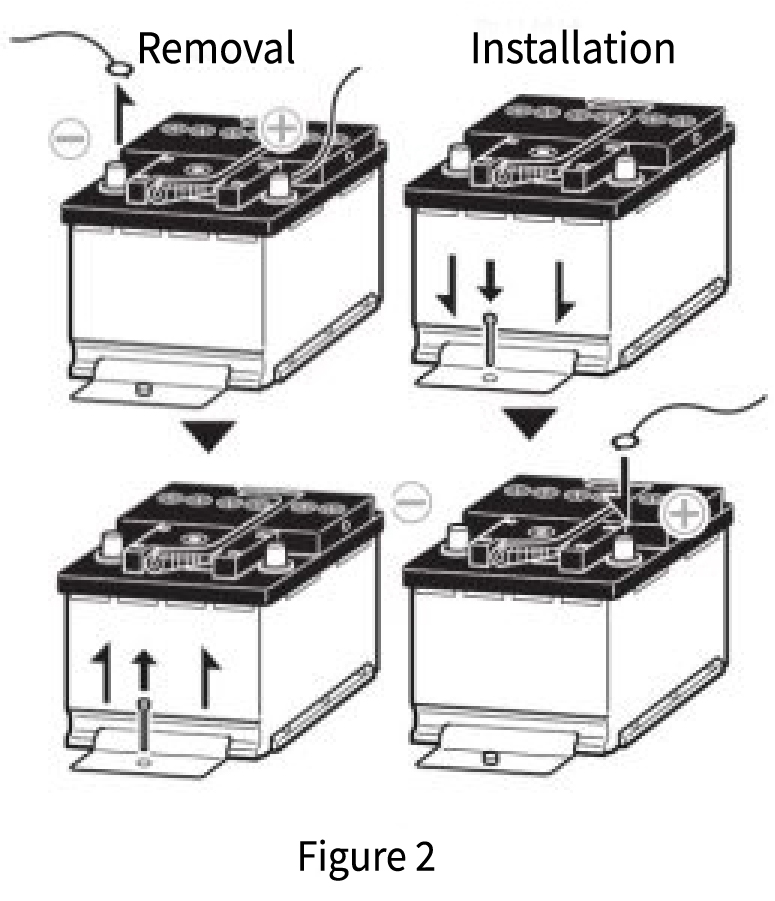
- First, loosen the nut on the vehicle-side negative (–) cable terminal (including cases where two terminals are installed), and remove the cable terminal from the battery’s negative terminal. (Figure 2)
- Next, remove the terminal cover from the vehicle-side positive (+) cable terminal, loosen the nut, and remove the cable terminal from the battery’s positive terminal.
- If the vehicle is equipped with a fluid-level sensor, record its mounting position (where it was installed on the battery) and remove it.
Since electrolyte may adhere to the removed fluid-level sensor, cover it with a cloth to prevent contact with the vehicle. - Loosen the battery mounting bracket and remove the battery while keeping it level. (Figure 2)
- For batteries from which the fluid-level sensor has been removed, take care to prevent electrolyte spillage.
- Batteries are heavy; use caution to prevent dropping or injury when moving them.
- Used batteries are recycled as raw materials. Do not dispose of them as-is; consult the retailer where you purchased the new battery.
- If the cable terminals are corroded, clean them using a wire brush or fine-grit sandpaper.
Installing the New Battery
- Confirm that there are no foreign objects on the battery tray. Place the new battery on the tray so that the positive (+) and negative (–) terminals are in the same positions as those of the removed battery, and secure it firmly with the mounting bracket so that it does not move. (Figure 2)
- If the old battery was equipped with a fluid-level sensor, reinstall it in the original position.
- Attach the vehicle-side positive (+) cable terminal to the battery’s positive terminal and tighten the nut securely. (Figure 2)
- Next, attach the vehicle-side negative (–) cable terminal to the battery’s negative terminal and tighten the nut securely.
- Applying a thin layer of grease to the metal parts of the cable terminals is effective for preventing corrosion.
- Reinstall the terminal cover onto the vehicle-side positive (+) cable terminal.
Vehicles equipped with an electronic locking system may automatically lock the doors once the replacement battery is installed after removal of old battery. When performing this work, always remove the key and keep the windows open.
How to Install the Gas Vent Tube
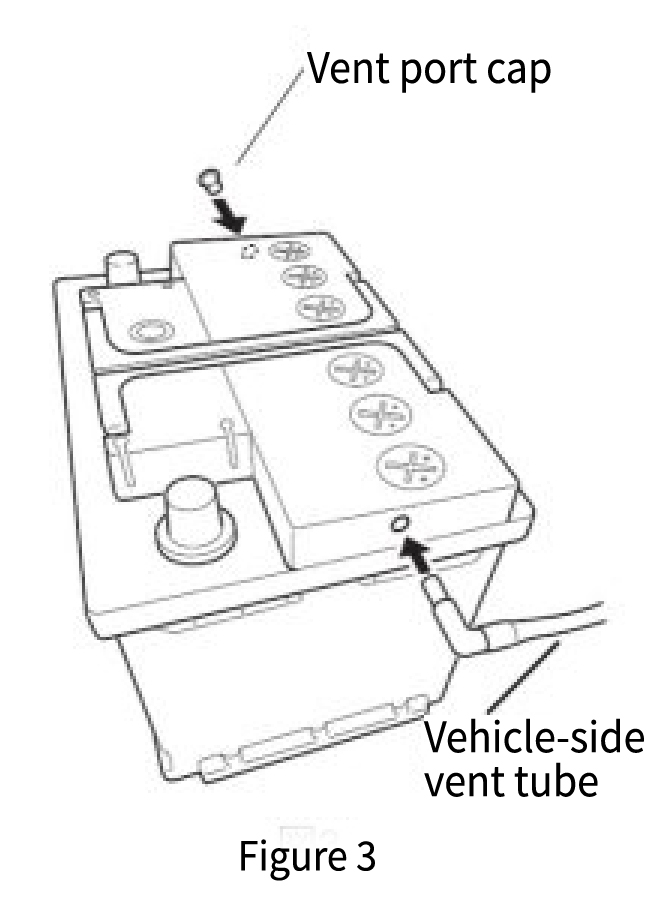
If a vent tube from the vehicle is connected, remove the gas vent tube from the vent hole of the old battery when replacing the battery, and install it into the vent hole of the new battery.
Be sure to install the gas vent tube so that hydrogen gas is discharged to the outside of the vehicle. (Figure 3)
Seal the gas vent hole on the opposite side that is not used for gas venting with the included vent port cap. (Figure 3)
Replacement Method for Passenger Vehicles (Tuflong EN)— When a Vent Extension Tube Is Included
Safety Indications
Safety-related information that may lead to personal injury or property damage if ignored or used incorrectly is indicated in three levels: Danger, Warning, and Caution.
| DANGER | Indicates an imminently hazardous situation that is expected to result in death or serious injury. |
| WARNING | Indicates a situation where death or serious injury may occur, or where minor injury or property damage is likely to occur frequently. |
| CAUTION | Indicates a situation where the likelihood of serious injury is low, but minor injury or property damage may occur. |
Safety Precautions
Please observe the following precautions to ensure safe battery replacement.
- The battery contains electrolyte (diluted sulfuric acid). Do not allow children or others who do not fully understand proper battery handling and associated hazards to touch the battery. Failure to do so may result in blindness or burns.
- When handling the battery, wear protective goggles and rubber gloves. Contact with the electrolyte may cause blindness or burns.
- Before handling the battery, touch a metal other than the battery such as the vehicle body to discharge static electricity. Static electricity may cause sparks, which can lead to ignition or explosion.
Precautions When Replacing the Battery
When replacing the battery, hydrogen gas emitted from the battery may ignite and cause an explosion. Please observe the following precautions:
- Do not bring fire sources near the battery (such as lit cigarettes, grinder sparks, or heaters).
- When installing the battery, do not short-circuit the positive (+) and negative (–) terminals, or the positive terminal and the vehicle body, using metal tools.
- For vehicles with a vent tube connected, firmly insert the L-shaped pipe of the vent tube into the battery’s vent hole. In addition, firmly insert the included vent cap into the unused vent hole on the opposite side. If insertion is loose, hydrogen gas may accumulate inside the vehicle, increasing the risk of explosion caused by an external ignition source.
- When connecting the vehicle’s cable terminals to the battery terminals, tighten the nuts securely.
Improper handling of the battery may cause ignition, explosion, rupture, electrolyte leakage, or vehicle damage.
Please observe the following instructions:
- When replacing the vehicle’s battery, stop the engine and remove the ignition key. For vehicles with smart keys, set the engine switch to the LOCK position or OFF position.
- Do not remove or install the battery while lights or other electrical switches are in the ON position.
- When connecting the vehicle’s cable terminals to the battery, do not reverse the positive (+) and negative (–) terminals.
- Do not modify the battery terminals or block the vent holes of the battery’s vent plugs.
Improper handling of the battery may cause fire or corrosion due to electrolyte leakage.
Please observe the following precautions:
- Do not connect electrical devices directly to the battery.
- Secure the battery firmly using the mounting brackets.
- Do not apply oils or greases other than terminal grease to the battery terminals.
- Handle the battery horizontally without tilting, and do not install it on an inclined surface.
- If the battery is equipped with a heat shield, reinstall it correctly after replacement.
- After replacing the battery, reinstall the terminal covers correctly.
Vehicles equipped with electronic devices that have memory functions (such as navigation systems) may lose stored data when the battery is removed. Be sure to read the vehicle owner’s manual before replacing the battery.
If an auxiliary power supply is connected to the vehicle circuit for memory backup (commonly via the cigarette lighter socket), do not allow the vehicle’s positive (+) cable terminal to contact the negative (–) terminal or the vehicle body, which is grounded to the negative terminal, when removing the battery. If memory data is lost, consult the vehicle dealer.
- Always perform battery replacement in accordance with the vehicle owner’s manual and service manual.
- Depending on the vehicle model, setup using a dedicated tool* may be required.
* Setup refers to initialization of the vehicle computer (ECU, etc.).
Removing the Old Battery
- If a vent tube from the vehicle is connected, remove the vent tube from the battery’s vent hole. (Figure 1)
- Record the installed orientation of the battery (positions of the positive (+) and negative (–) terminals).
- First, loosen the nut on the vehicle-side negative (–) cable terminal (including cases where two terminals are installed), and remove the cable terminal from the battery’s negative terminal. (Figure 2)
- Next, remove the terminal cover from the vehicle-side positive (+) cable terminal, loosen the nut, and remove the cable terminal from the battery’s positive terminal.
- If the vehicle is equipped with a fluid-level sensor, record its mounting position (where it was installed on the battery) and remove it. Since electrolyte may adhere to the removed fluid-level sensor, cover it with a cloth to prevent contact with the vehicle.
- Loosen the battery mounting bracket and remove the battery while keeping it level. (Figure 2)
- For batteries from which the fluid-level sensor has been removed, take care to prevent electrolyte spillage.
- Batteries are heavy, so when moving them, take care to prevent dropping or other accidents.
- Used batteries are recycled as raw materials. Do not dispose of them as waste; consult the retailer where you purchased the new battery.
- If the cable terminals are corroded, clean them using a wire brush or fine-grit sandpaper.
Installing the New Battery
- Confirm that there are no foreign objects on the battery tray. Place the new battery on the tray so that the positive (+) and negative (–) terminals are in the same positions as those of the removed battery, and secure it firmly with the mounting bracket so that it does not move. (Figure 2)
- If the old battery was equipped with a fluid-level sensor, reinstall it in the original position.
- Attach the vehicle-side positive (+) cable terminal to the battery’s positive terminal and tighten the nut securely. (Figure 2)
- Next, attach the vehicle-side negative (–) cable terminal to the battery’s negative terminal and tighten the nut securely.
- Applying a thin layer of grease to the metal parts of the cable terminals is effective for preventing corrosion.
- Reinstall the terminal cover onto the vehicle-side positive (+) cable terminal. Vehicles equipped with an electronic locking system may automatically lock the doors once the replacement battery is installed after removal of old battery.
When performing this work, always remove the key and keep the windows open.
How to Install the Gas Vent Tube
If a vent tube from the vehicle is connected, remove the gas vent tube from the vent hole of the old battery when replacing the battery, and install it into the vent hole of the new battery.
Be sure to install the gas vent tube so that hydrogen gas is discharged to the outside of the vehicle. (Figure 3)
If the vehicle’s vent tube does not reach the battery’s gas vent hole, use the vent extension tube to connect it to the vent hole.