
Virtual Factory Tour (Saitama Works)
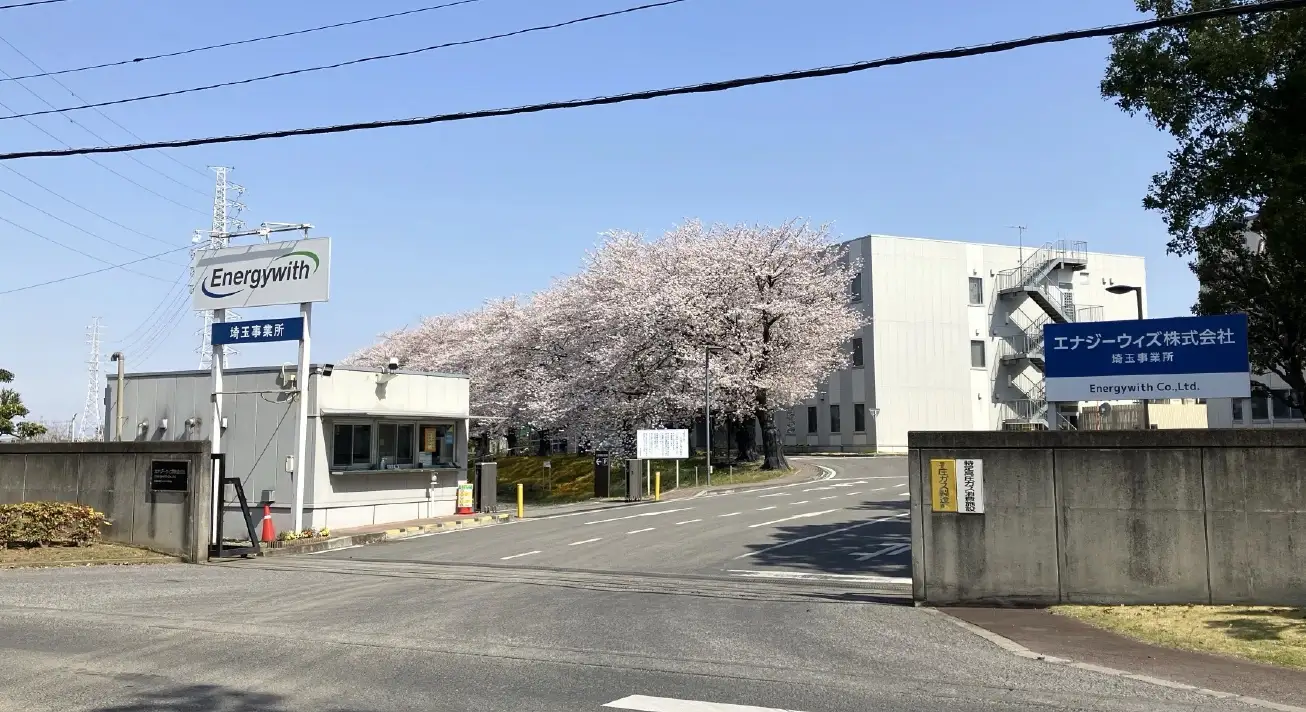
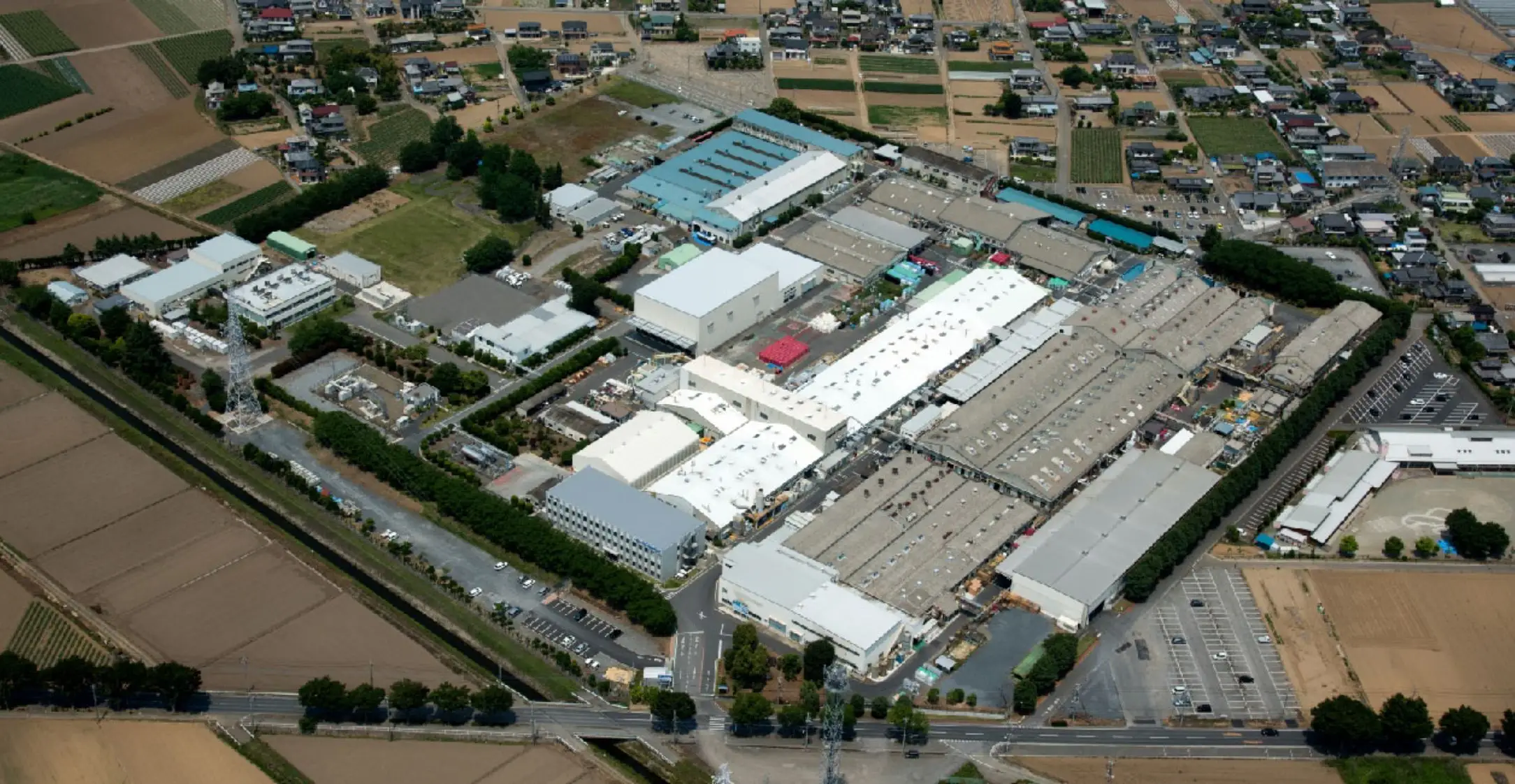
Saitama Works
- Location
- 2200 Oka, Fukaya-shi, Saitama 369-0297 JAPAN MAP
- Site Area
- Approx. 124,000 m²
Products Manufactured
Factory Facilities Overview
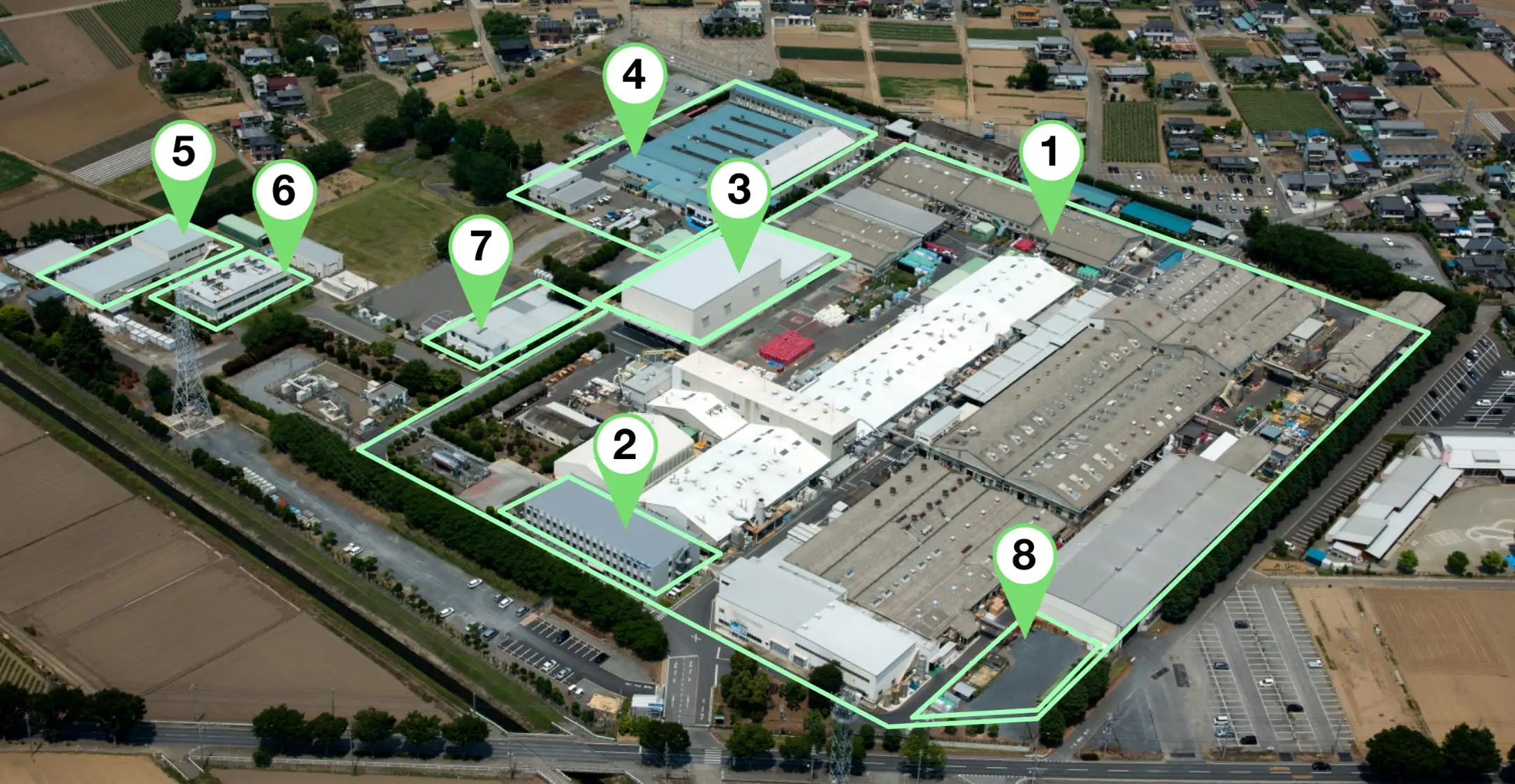
Battery Plant (Automotive Battery Manufacturing)
This plant is equipped with all processes required to manufacture automotive lead acid batteries—ranging from raw materials and electrode plate production to assembly, charging, and packaging. It produces batteries for a wide variety of applications, including passenger cars, buses, trucks, agricultural machinery, and construction machinery.
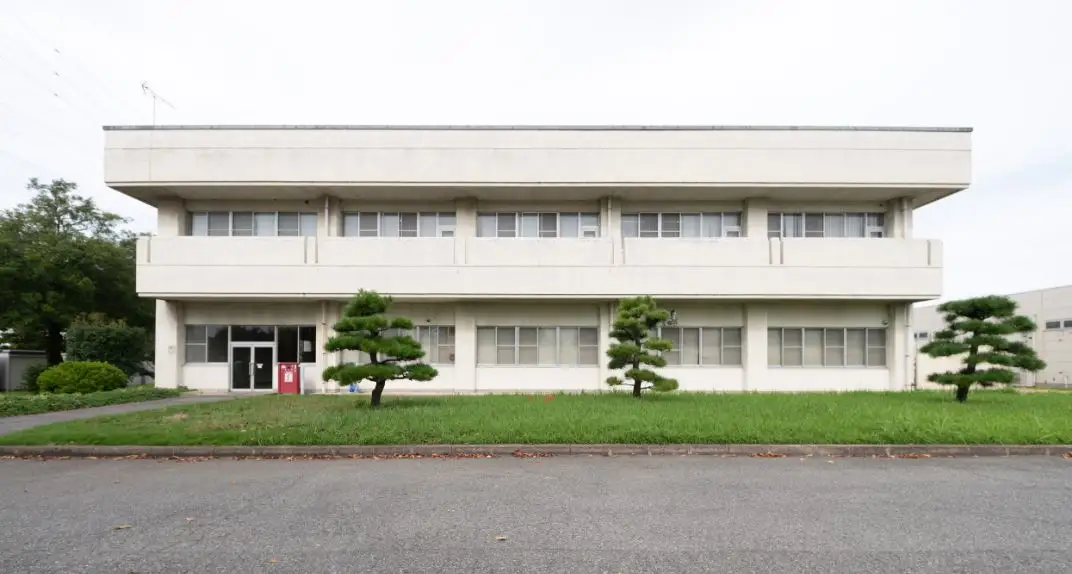
Technology & Administration Building
This building houses technical departments such as design, quality assurance, and environmental safety, as well as administrative divisions including HR & General Affairs, Finance, IT, and Procurement. It plays a critical role in supporting the overall functions of the site by integrating technical and administrative capabilities.
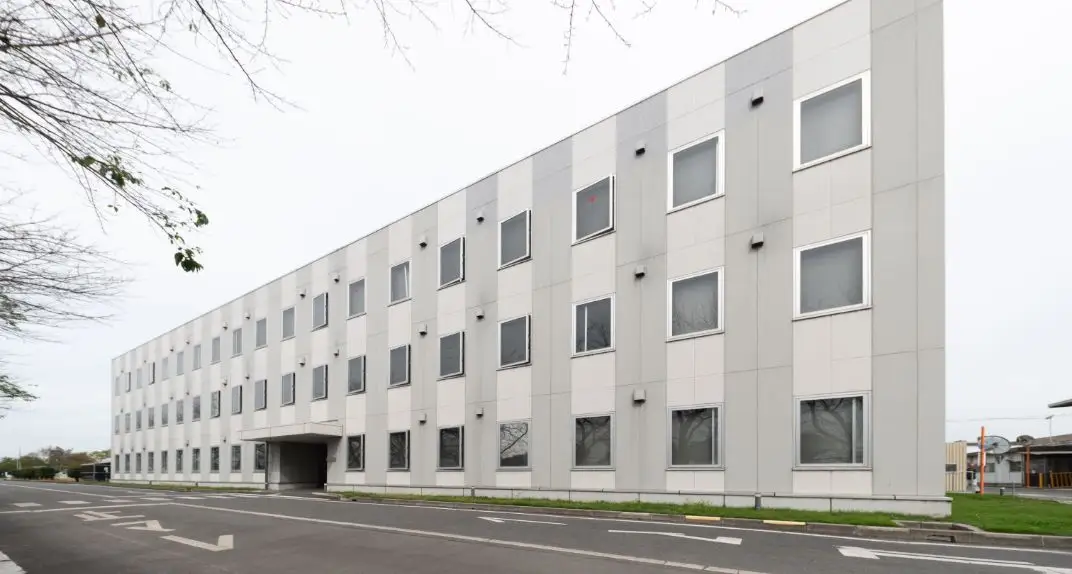
Automated Warehouse
A large automated warehouse capable of storing up to 6,000 pallets (approx. 300,000 automotive batteries). Automotive batteries produced at the plant are shipped from here to destinations across Japan.
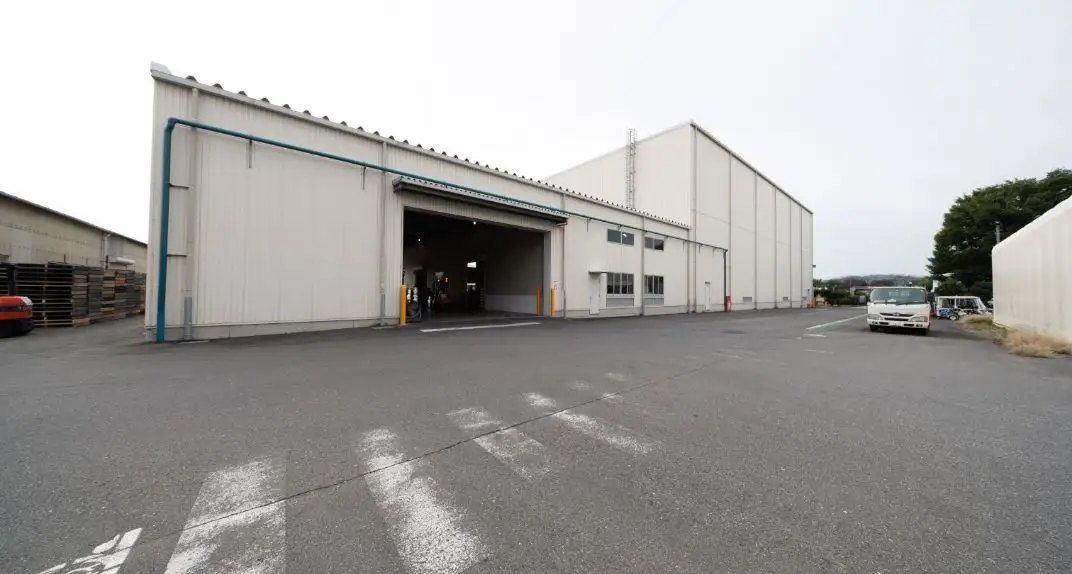
Equipment Plant
This plant handles everything from sheet-metal processing to cabinet fabrication, assembly, wiring, performance testing, and final shipment for DC power supply equipment. These units ensure stable power supply to equipment that must remain operational during power outages or for control systems, making them indispensable devices combined with storage batteries.
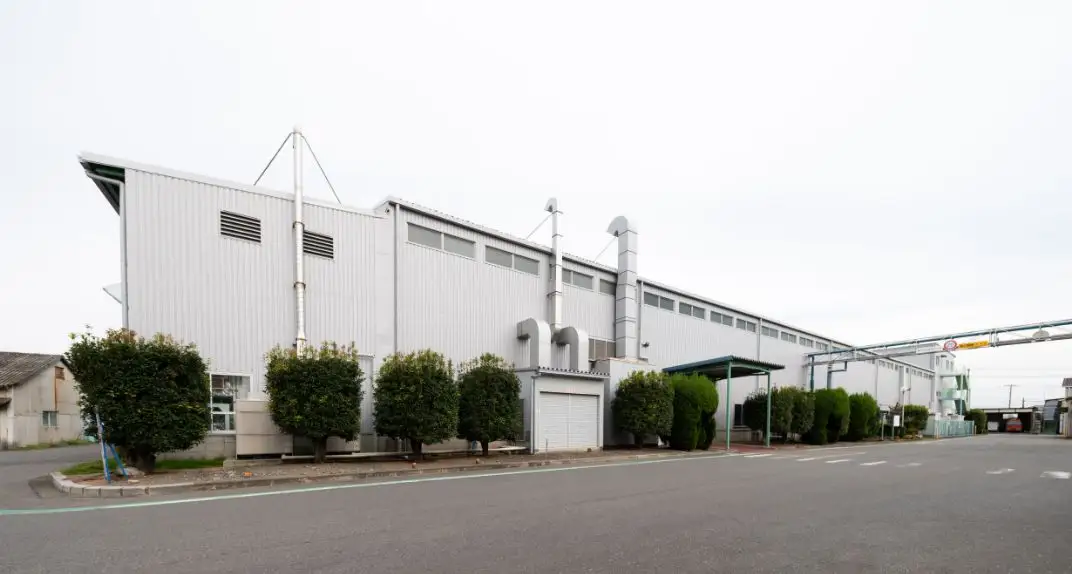
Cart Plant
Energywith is the first company in Japan that developed electric carts. This plant manufactures electric carts used not only at golf courses but also in tourist areas, factories, and resort facilities.
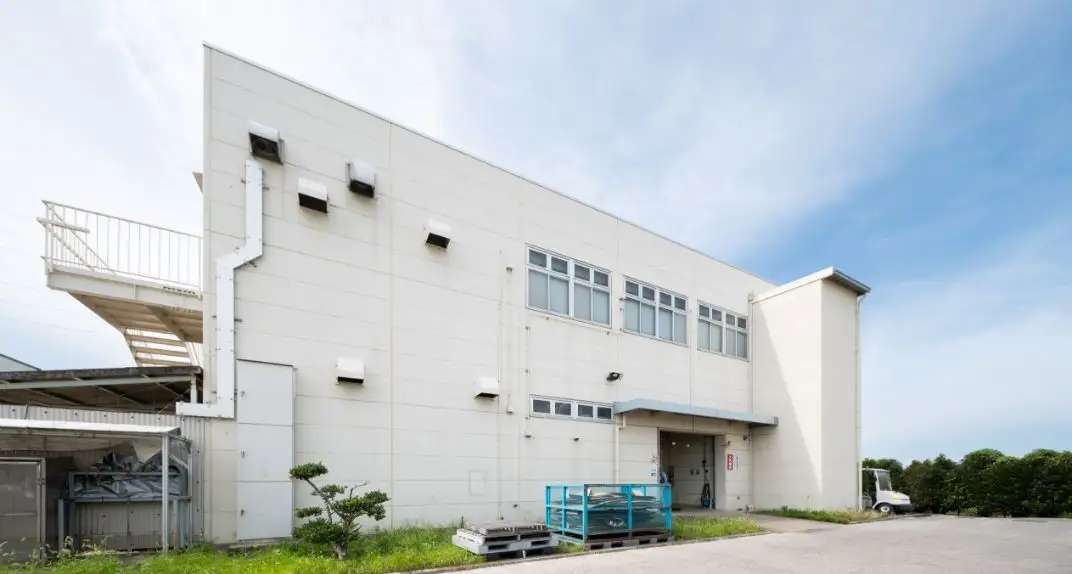
Research Building
Energywith is responsible for developing elemental technologies that enhance the performance of lead acid batteries, as well as conducting R&D for promising nickel-zinc batteries and next-generation batteries.
Cafeteria
The employee cafeteria offers a bright and clean dining space with nutritious daily menus at reasonable prices—serving as a place of relaxation that supports both the body and mind of employees.

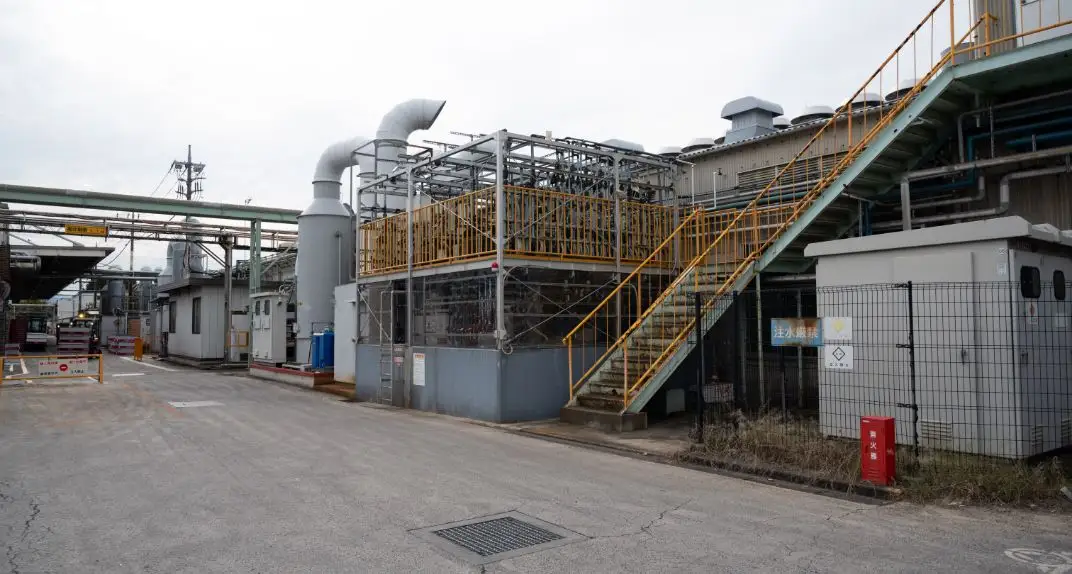
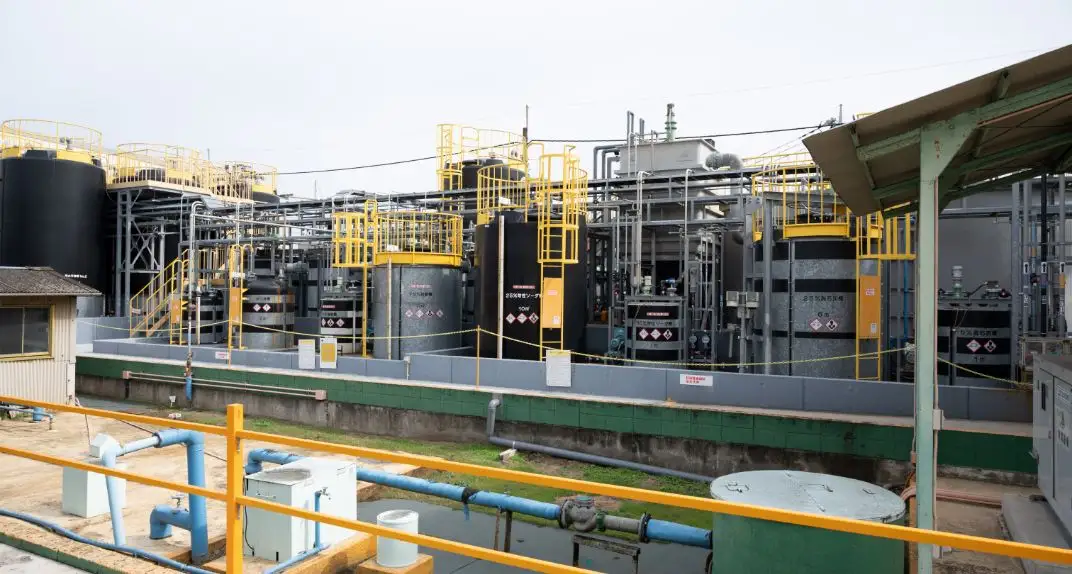
Water Treatment Plant
This facility reduces lead content and acidity in wastewater generated from various manufacturing processes to below environmental regulatory levels, enabling safe discharge into rivers. It plays a key role in minimizing environmental impact.
Manufacturing Processes
How Automotive Lead Acid Batteries Are Made
-
Electrode Plate Process (Lead Paste Manufacturing) – Lead Powder
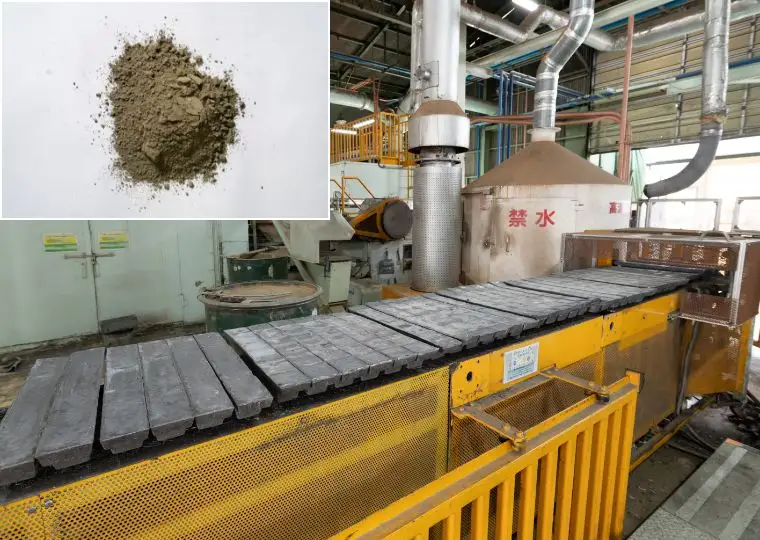
Lead powder is produced by melting lead ingots at high temperature to form spherical lead pieces. These are placed into a rotating drum, where air is supplied as the drum turns. The pieces collide with each other and undergo oxidation, gradually reducing them into a fine powder.
-
Electrode Plate Process (Lead Paste Manufacturing) – Paste Mixing
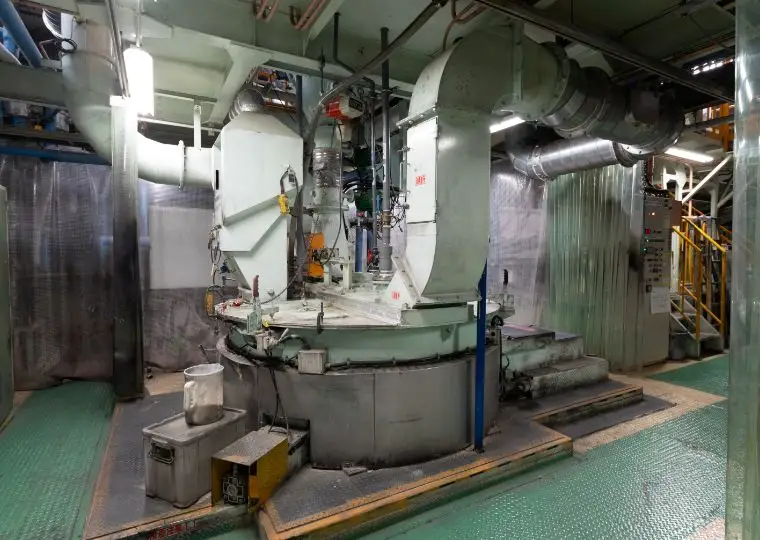
Lead powder is mixed with diluted sulfuric acid, water, and additives to create a chemical reaction that forms lead paste, which is used as the active material for both positive and negative electrodes.
-
Electrode Plate Process (Grid Manufacturing) – Lead Sheet Rolling
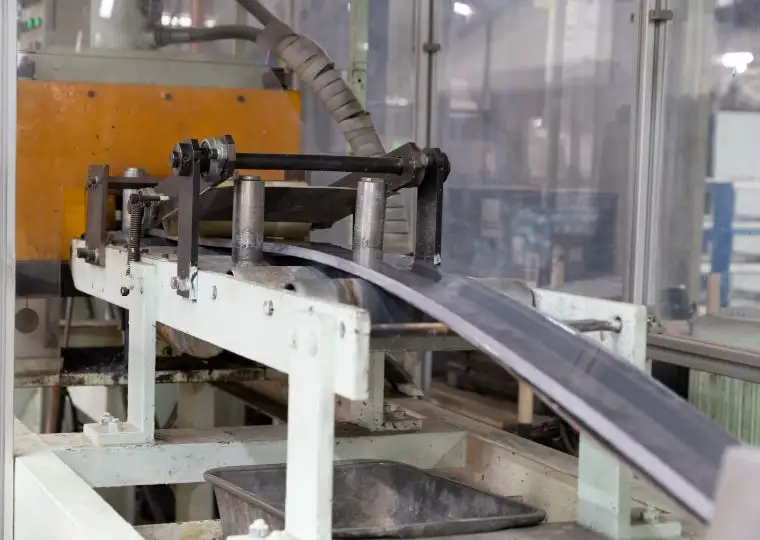
This process manufactures the grid substrate for automotive batteries. Lead ingots are processed into sheets and further rolled to achieve the required thickness. This rolling process enhances the strength and durability of the grid substrate, ensuring quality that withstands long-term use.
-
Electrode Plate Process (Grid Manufacturing) – Expanded Metal Process
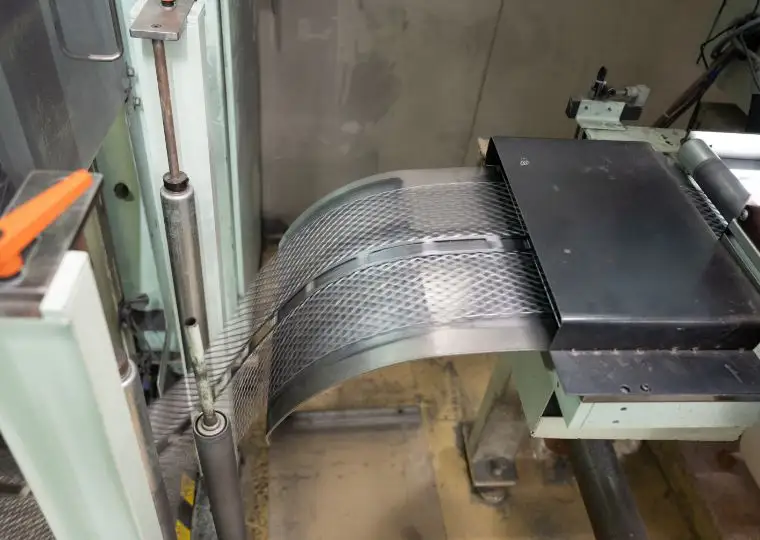
Sheet lead is processed into a grid pattern. Slits are pressed into the sheet, expanded into a mesh structure, and then punched to form the current collector. This grid substrate supports the electrodes and ensures efficient current flow.
-
Electrode Plate Process (Lead Paste Manufacturing) – Pasting
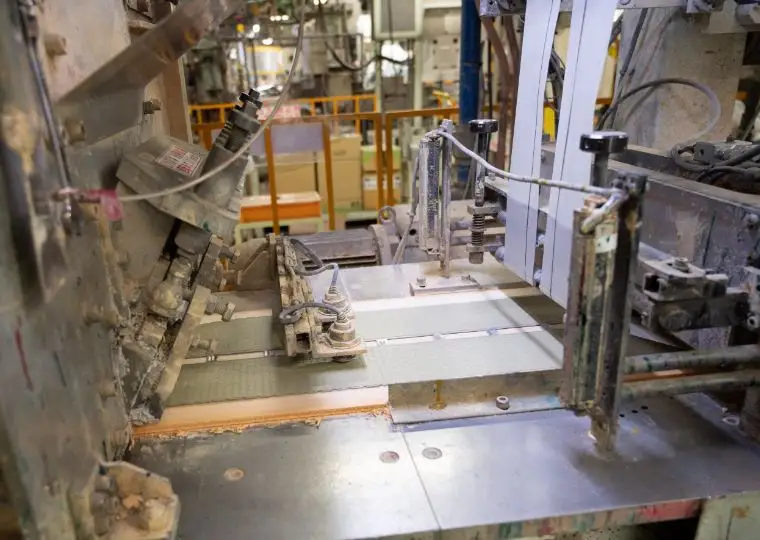
The lead paste produced in the mixing process is evenly applied onto the expanded-metal grids and cut to the prescribed dimensions. This creates the positive and negative plates.
-
Electrode Plate Process (Lead Paste Manufacturing) – Curing
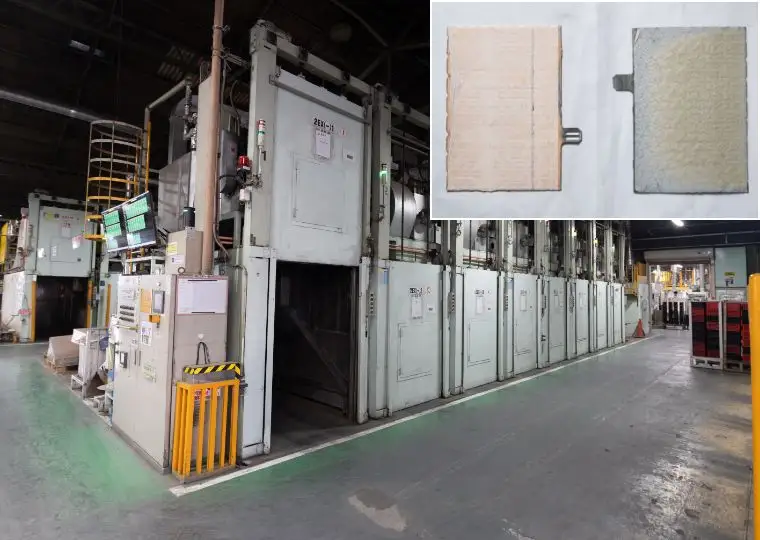
The pasted plates are dried and then transferred to a curing oven, where oxidation is accelerated. This step enhances adhesion between the grid and the paste—an essential process affecting battery performance and durability.
-
Container Molding Process
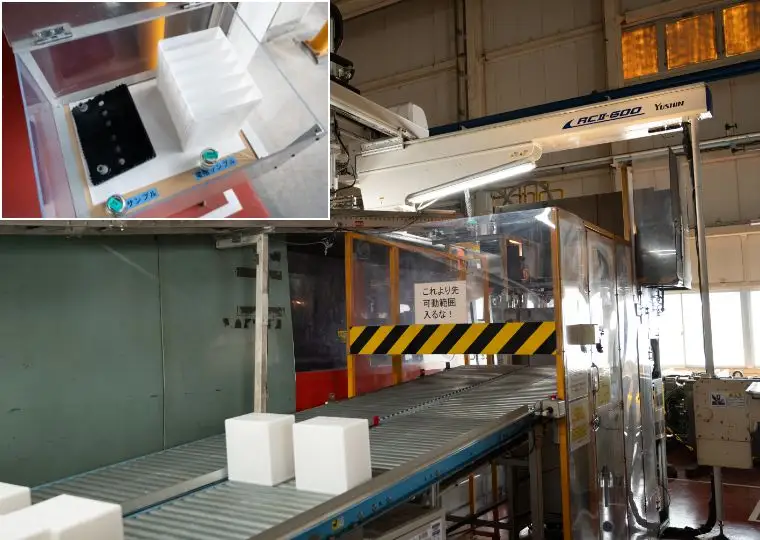
The case and cover of automotive batteries are molded from weather-resistant resin using injection molding. High precision and durability ensure the product withstands severe operating environments.
-
Assembly Process
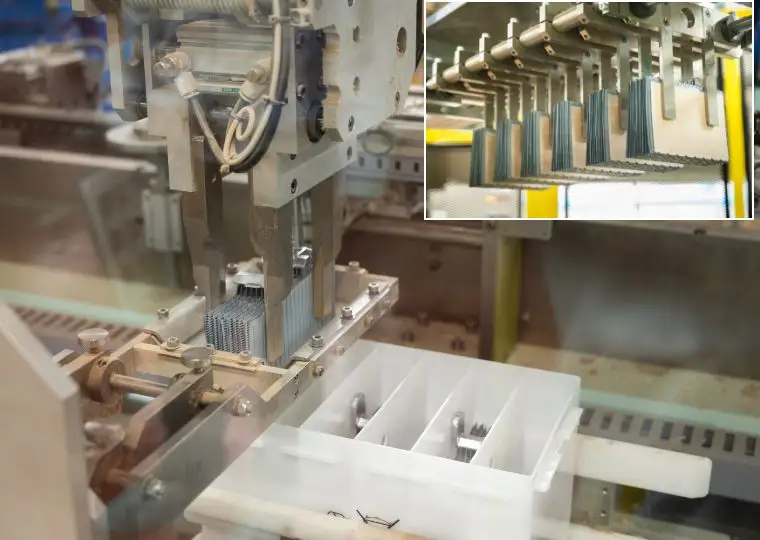
Positive and negative plates are stacked alternately, with separators covering the negative plates. The plates are welded to form plate groups, which are connected in series (six 2V cells) to create a 12V battery. The case is sealed, terminals are formed, and the battery structure is completed.
-
Charging Process
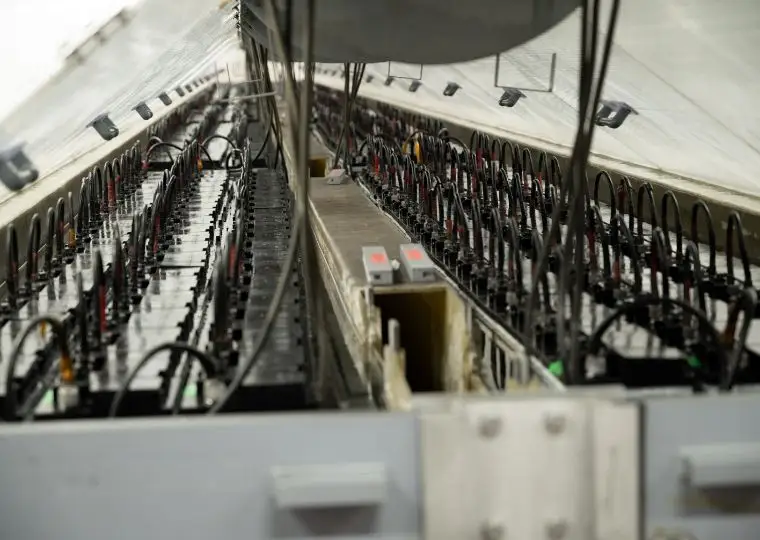
Diluted sulfuric acid is injected into the assembled battery, and DC current is applied to charge it. After charging and multiple inspections, the battery is approved for shipment as an automotive lead acid battery.
-
Packaging Process
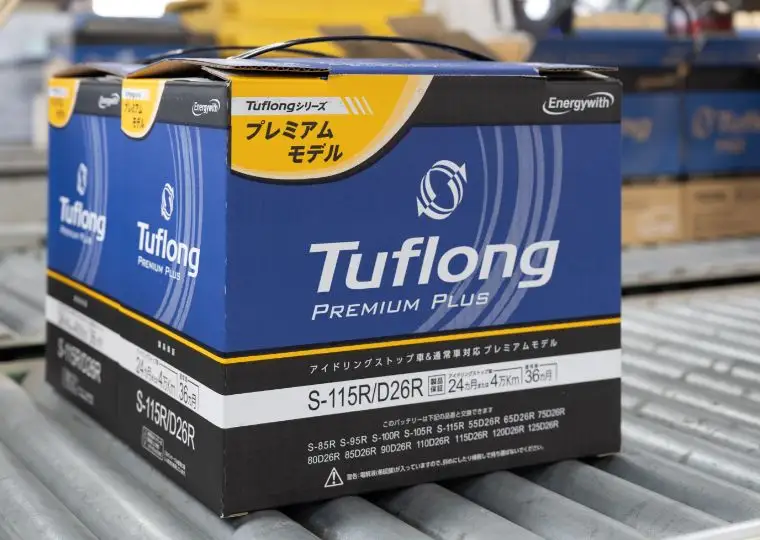
After final inspection, batteries are packed into cartons and shipped to customers.
How Power Supply Units Are Made
-
Specification & Drawing Preparation
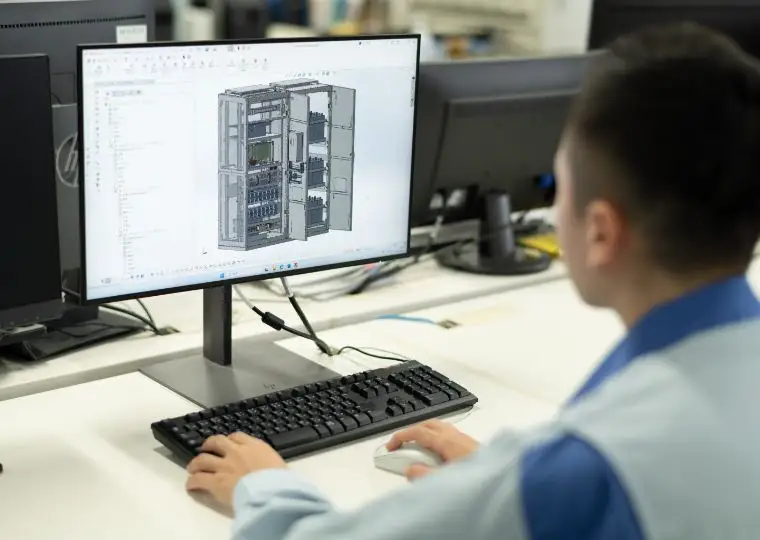
Power supply units are custom-made. Estimates and electrical CAD designs are prepared based on customer requirements and installation conditions. After receiving an order, manufacturing drawings (3D-CAD) are created.
-
Sheet Metal Fabrication & Painting
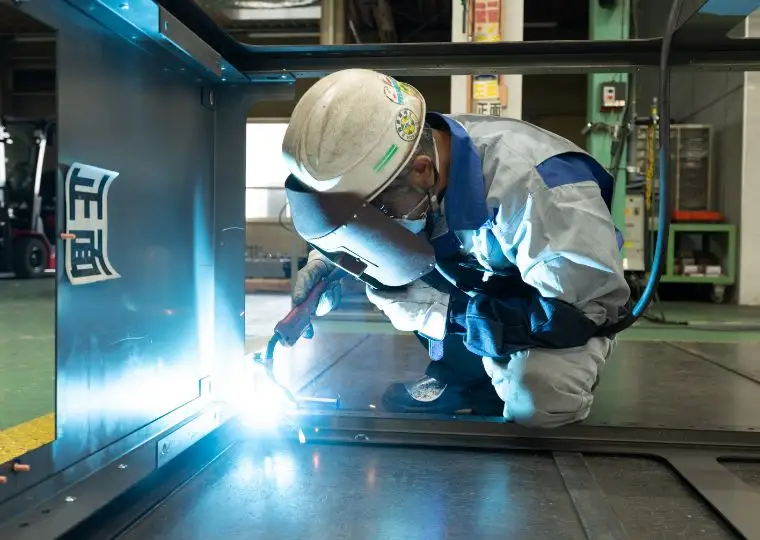
The enclosure (cubicle) that houses electrical components is manufactured using turret punch/press machines, bending, welding, and assembly. The final paint finish meets customer-specified color, coating thickness, and gloss.
-
Assembly (1)
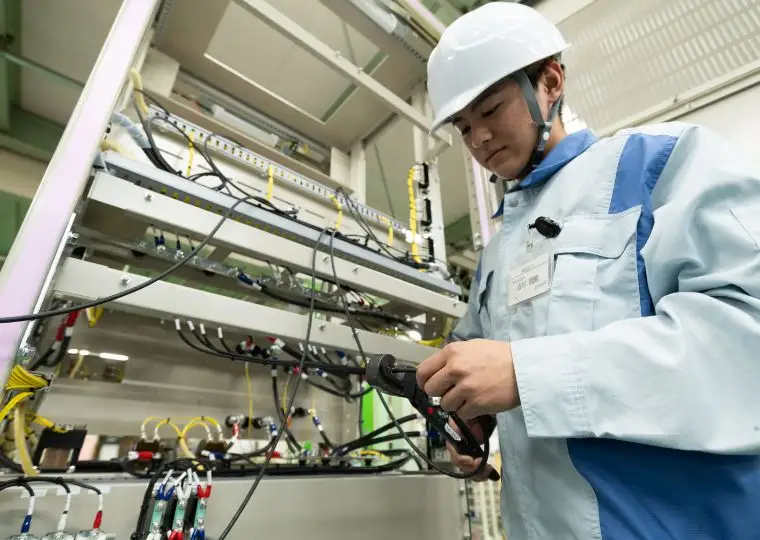
Electrical components and sheet metal panels are installed in the painted enclosure. Certified technicians crimp terminals and perform wiring and line-routing tasks.
-
Assembly (2)
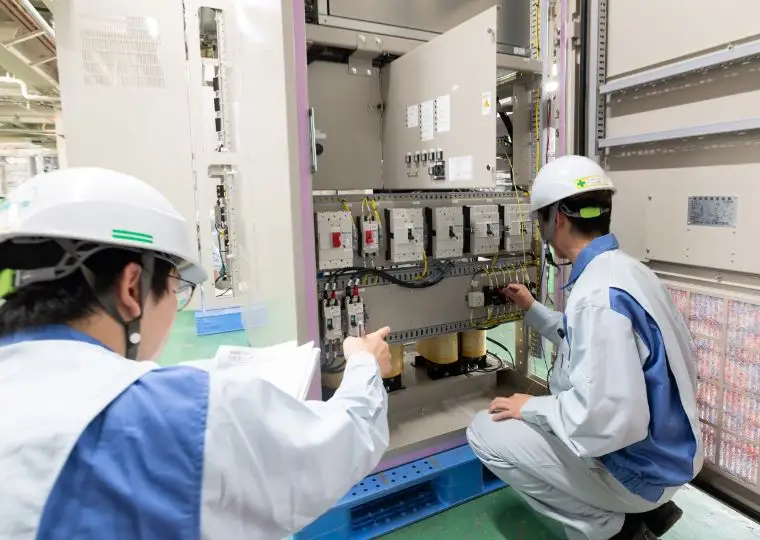
After wiring completion, continuity checks are performed. In-process inspectors conduct final assembly checks before the unit moves to testing.
-
Performance Testing
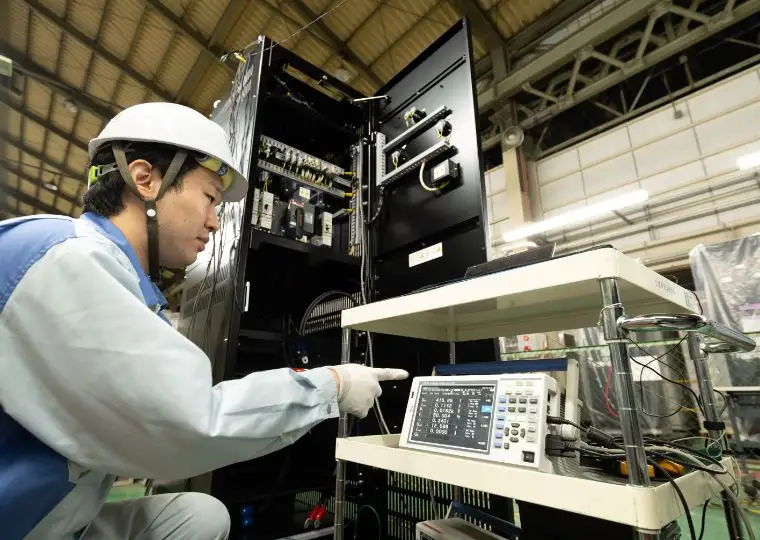
Appearance and electrical characteristics are inspected to ensure compliance with drawings and specifications agreed with customers. Electrical test data is automatically recorded.
-
Shipping
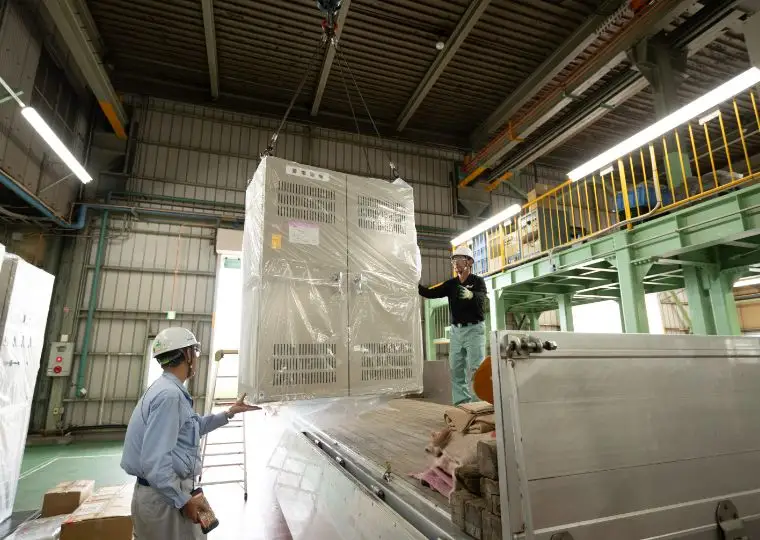
After testing, products are cleaned, packaged, loaded onto trucks, and shipped.
-
Installation & Maintenance
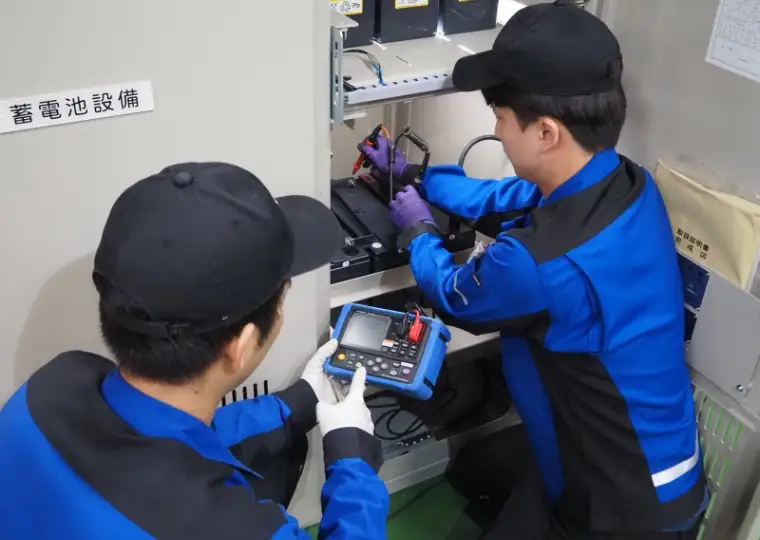
Units are installed at designated customer sites, and periodic maintenance services are provided for safe long-term operation.
How Electric Golf Carts Are Made
-
Frame Fabrication
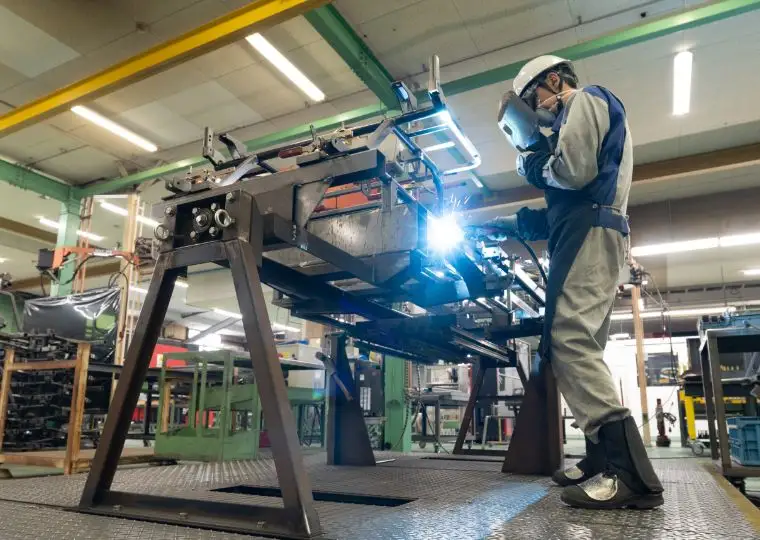
Three separately manufactured frame sections are welded together by automated robots to form one complete frame.
-
Assembly (Phase 1)
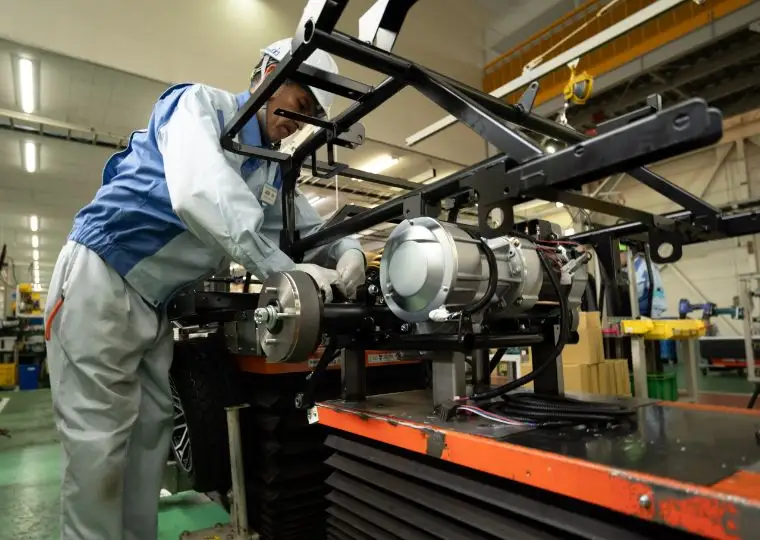
Drive-system parts such as the traction motor and transmission, as well as steering components such as the steering gears, are installed onto the frame.
-
Assembly (2)
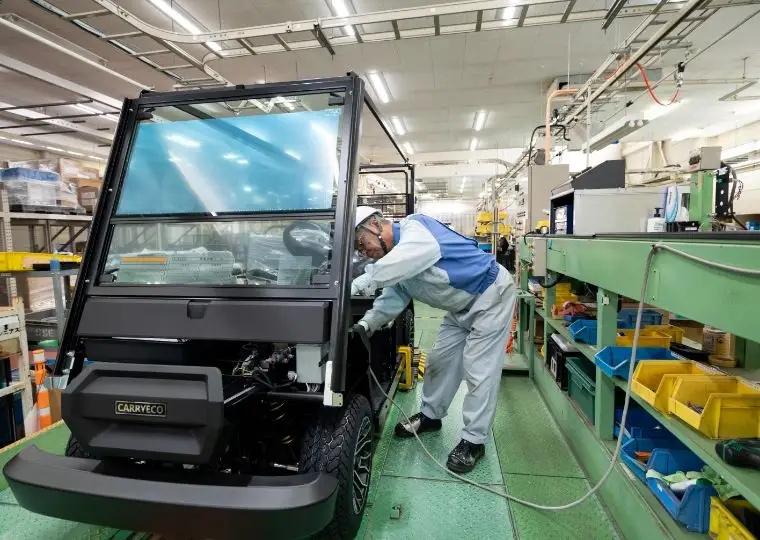
Electrical wiring is performed, followed by installation of the battery.
-
Assembly (3)
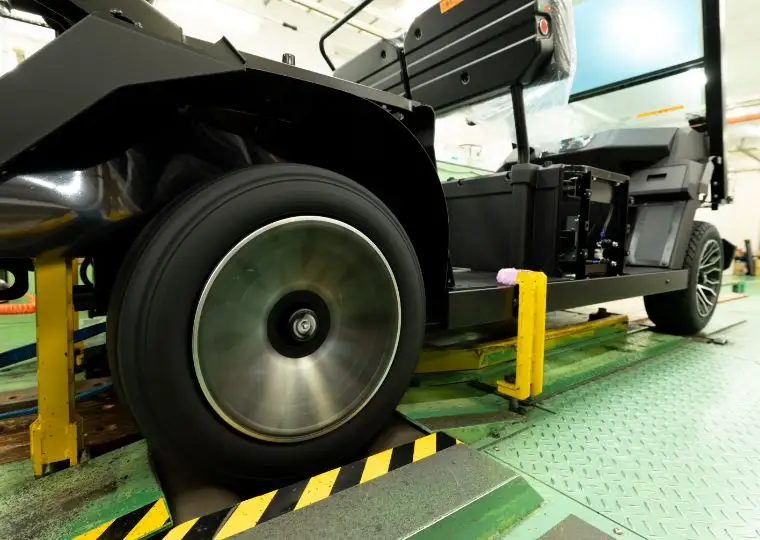
Driving tests are performed using inspection equipment, and exterior components such as cowls are installed to finish.
-
Pre-Shipment Driving Test
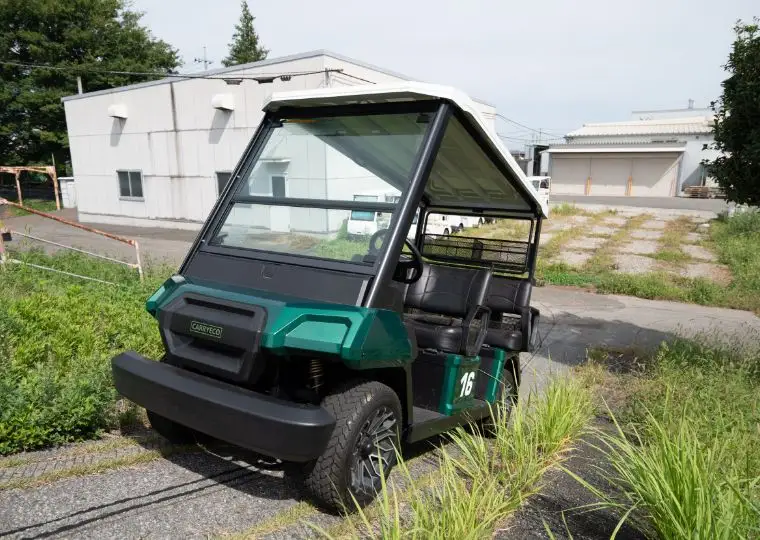
Completed carts are driven on a slope-equipped test course simulating a golf course. After driving and charging checks, inspection is completed.